Is a Product Design Agency Too Expensive? What UI/UX Design Really Costs


AI Summary. What’s included?
This guide explains what UI/UX and product design really cost and whether an agency is worth the money. It covers hourly rates by region, typical prices by project type, why agencies cost more than freelancers, and a side-by-side comparison of an agency, a freelancer and an in-house designer. It also covers the cost of cheap design, when an agency is too expensive for you, how to get agency-level design on a smaller budget and what Glow costs.
What UI/UX and product design really cost in 2026: agency rates, prices by project type, agency vs freelancer vs in-house, and how to spend less.
"An agency is too expensive for us" is one of the most common things founders tell us, usually right before explaining that their last freelancer disappeared halfway through the project. Sometimes they're right. An agency is not the best use of money for every startup, and this article says so where it applies.
But the comparison is usually made on the wrong number. An hourly rate or a project quote tells you what you pay. It doesn't tell you what you get, how long it takes, or what it costs when the work has to be redone. Below are real price ranges, what drives them, a full-cost comparison of the three main options and the situations where an agency really is overkill.
How much does UI/UX design cost?
According to Clutch's design pricing data, a typical UX/UI design project costs between $10,000 and $49,999, and the most common rate across design agencies listed on the platform is $25 to $49 per hour. That average hides a wide spread: Clutch's regional data shows US design firms mostly charging $100 to $149 per hour, while firms in India, the Philippines and Ukraine mostly charge $25 to $49.
Hourly rates are only part of the picture. A cheaper team that needs twice the hours, or produces work your developers can't build, is not cheaper.
Typical prices by project type
Scope drives cost far more than the provider. These are realistic ranges for software products, based on public pricing from agencies like ours and the Clutch data above:
What moves a project to the top of its range: number of user roles and workflows, depth of research, platforms (web, iOS, Android), complex data views, integrations and how much of a design system needs to be built. What keeps it at the bottom: a tight core flow, existing brand assets and a decision maker who answers quickly.
Why agencies cost more than freelancers
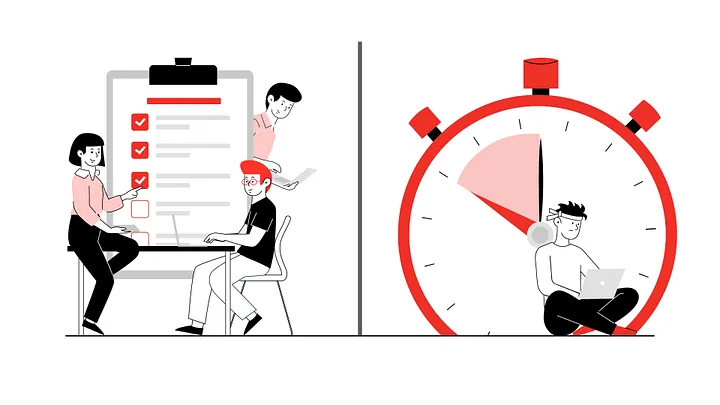
An agency's hourly rate is higher because you're buying more than one person's time. In a typical agency engagement the price covers:
> * A team, not a person. A designer for the work, a design lead reviewing quality and direction, often a researcher and a project manager.
> * Continuity. If a designer gets sick or leaves, someone who knows the project takes over. With a freelancer, the project stops.
> * Process. Discovery, feedback rounds, handoff standards and documentation that have been tested on many projects.
> * Range. UX, UI, research, design systems and sometimes development under one contract.
> * Accountability. A company with a reputation and contracts, not an individual you can't reach after delivery.
Whether those things are worth the premium depends on what's at stake. For a pitch deck, probably not. For the core product your revenue depends on, usually yes.
The real comparison: agency vs freelancer vs in-house
The fair way to compare options is the full cost of getting the work done over a realistic period, not the rate card. Here's what six months of product design looks like for a Series A SaaS company:
For context: our guide on how to hire a UX designer puts a mid-level US UX designer at roughly $90,000 to $125,000 a year before benefits, with recruiting fees often adding $14,000 to $22,000 per hire. Six months of that salary alone is about $45,000 to $62,000, and the first months go to hiring and onboarding rather than design. Six months of a Glow retainer is $68,400 for a project manager, a design lead and a senior designer, starting within days. For long-term, steady work, in-house becomes cheaper. For the first year of a product, or for uneven workloads, it usually doesn't.
The cost of cheap design
The most expensive design is the one you pay for twice. It happens in a few predictable ways:
> * Designs that can't be built. Screens that ignore your tech stack or edge cases get reworked during development, where every change costs engineering time, not just design time.
> * Redesigning after launch. A product launched with a confusing onboarding or core flow often needs a second round of design within months, plus the users lost in between.
> * Starting over with a new provider. When a freelancer drops out mid-project, the next person needs time to understand the work and often prefers to redo it.
> * No design system. Without reusable components, every new feature is designed and built from scratch, and inconsistency piles up.
None of this means you need the most expensive option. It means comparing options by what the finished, working result will cost, not by the first invoice.
When an agency is too expensive for you
Sometimes the honest answer is yes, an agency is more than you need right now. A freelancer or a lighter option is usually the better choice when:
> * The task is small and well defined: a landing page, a set of marketing visuals, a few screens added to an existing system.
> * You're still validating whether anyone wants the product, and a clickable prototype or no-code test would answer the question.
> * Your total runway is short and design would take a share of it that puts the company at risk.
> * You already have a strong in-house designer who just needs extra hands for a few weeks.
> * You have no one with time to review and approve design work. An agency can't make product decisions for you.
How to get agency-level design on a smaller budget
Fix the scope. A fixed-price project with a clear boundary costs less and carries less risk than open-ended hourly work. Decide what's in, what's out and what waits for phase two.
Start with the core flow. Design the one flow that proves your product's value, test it with users, and expand from there. This is how a focused MVP design engagement keeps costs predictable.
Audit before redesigning. If you have a product already, a UX audit shows which problems actually cost you users. Fixing the top five issues often matters more than a full redesign.
Reuse what exists. Building on an established component library instead of a fully custom design system can save weeks.
Test before you commit. A paid pilot or a trial on one real screen shows quality and communication before you sign anything large.
Mix models. Many startups use an agency for the foundation (MVP, design system) and a freelancer or junior in-house designer to extend it afterwards. Our guide to outsourcing UX/UI design covers these models in more detail.
What Glow costs
We publish our prices because the question "is this too expensive?" deserves a straight answer:
> * Free 3-day trial. A Glow designer redesigns one real screen from your product in three working days. No contract, and you keep the files.
> * MVP: $12,500, fixed, four weeks. From idea to a working MVP: discovery and scope in week one, design and build in weeks two and three, review and handoff in week four.
> * Design retainer: $12,000 a month. A project manager, a design lead and a senior product designer on your product every week. Three-month minimum, then 30 days' notice. See the design retainer page for details.
> * Fixed-scope projects such as redesigns, features and UX audits are quoted at a fixed price after a short review of the actual work.
> * Enterprise: from $20,000 a month for larger products and several teams.
If none of these fits your stage, we'll tell you, and suggest what would.
FAQ
How much does UI/UX design cost?
Clutch data puts a typical UX/UI design project between $10,000 and $49,999. Small audits cost a few thousand dollars, MVP designs often fall between $10,000 and $35,000, and full product redesigns can pass $100,000. Hourly rates range from about $25 to $49 for agencies in lower-cost regions to $100 to $149 for most US firms.
What is a typical designer fee?
It depends on who you hire and where. Freelance rates vary widely with experience and location. Agencies usually charge either a fixed price per project or a monthly retainer. A full-time mid-level UX designer in the US earns roughly $90,000 to $125,000 a year before benefits.
Is it cheaper to hire a freelancer or an agency?
Per hour, a freelancer is usually cheaper. For a full product, the total cost can end up similar or higher once you count your management time, gaps in skills and the risk of restarting if the freelancer becomes unavailable. Freelancers are the better value for small, well-defined tasks.
How much does it cost to design an app?
Designing an MVP of a mobile or web app typically costs $10,000 to $35,000 with an agency, depending on the number of flows, platforms and research involved. Larger apps with several user roles, complex data and a full design system often cost $50,000 or more.



Related Articles Prompted by Glow












Get weekly glow prompts—
insights from the frontline of product design
Check your inbox for future updates.

No spam.
Just sharp insights that make you better at design & AI.
Want results like this? Book a call
Let’s talk through your product in 30 minutes — no briefs, no fluff. Or start with a free 3‑day trial: one real screen from your product in 3 working days. No card, no contract.