Market Research vs User Research: What's the Difference?


AI Summary. What’s included?
This guide explains the difference between market research, which tells you who will buy and why, and user research, which shows how people use your product. It covers what each one tells you, why what people say differs from what they do, where the two overlap and which one you need. It also covers how startups can combine both on a small budget.
Market research tells you who will buy and why. User research shows how people use your product. Key differences, examples and when you need each.
Market research studies the market: who might buy, how many of them there are, what they compare you with and what they'll pay. User research studies use: how real people try to get a task done with your product, where they get stuck and why. One informs whether and where to compete. The other informs what to build and how it should work.
Teams mix them up all the time. A founder runs a survey and calls it user research. A product team runs five usability tests and draws conclusions about market demand. Both are using a good method to answer the wrong question. This guide explains the difference, where the two overlap, and how a startup can use both without a research department.
Market research vs user research at a glance
What market research tells you

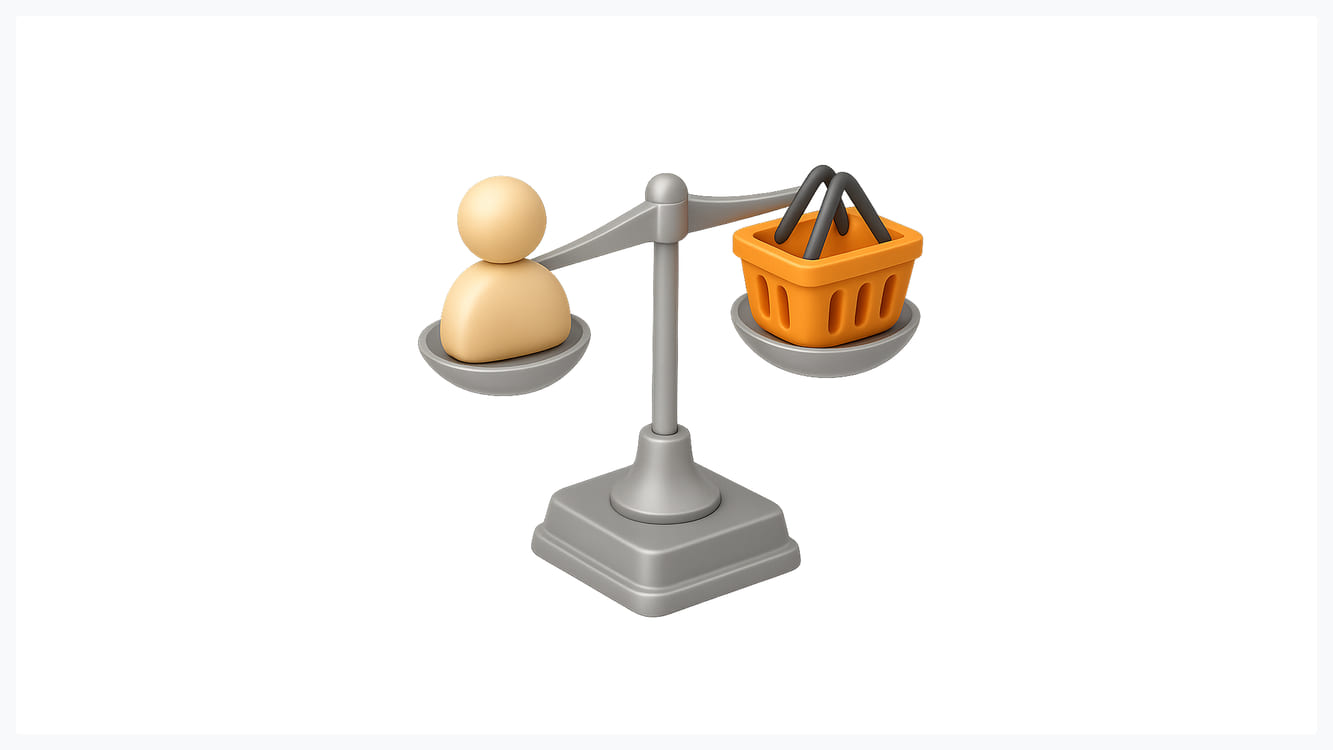
Market research looks outward. It answers questions about demand and competition: how big the opportunity is, which segments feel the problem most, what alternatives people use today, how they choose between them and what price they'd accept.
It's usually described in four types, based on two choices. Primary research collects new data directly from people, through surveys, interviews or focus groups. Secondary research uses data that already exists, such as industry reports, public company filings, government statistics and competitor websites. Each of those can be quantitative, measuring how many and how much, or qualitative, exploring why.
Imagine a startup planning an invoicing tool for freelance designers. Market research would estimate how many freelance designers exist in its target countries, how they invoice today, which tools they already pay for, how much they spend, and whether "late payments" or "time spent on admin" is the bigger pain. The result shapes who the product is for, how it's positioned and how it's priced.
What market research can't tell you is whether your invoicing flow makes sense to the person using it on a Friday evening with three clients waiting.
What user research tells you
User research looks at people in the act of using something: your product, a prototype, a competitor's tool or the spreadsheet they use instead. It answers questions about behavior and experience. What are they trying to get done? What steps do they take? Where do they hesitate, make mistakes or give up? What workarounds have they invented?
For the same invoicing startup, user research might mean watching six freelance designers create an invoice in a prototype. The team could find that most of them want to start from a previous invoice instead of a blank form, that the "tax" field confuses people working across borders, and that nobody notices the reminder settings. None of that would show up in a market survey, and all of it affects whether people keep using the product after the first week.
UX research is the part of user research focused on digital product experience: usability, interaction design, information architecture. In practice the terms are often used interchangeably.
Say vs do: why the difference matters
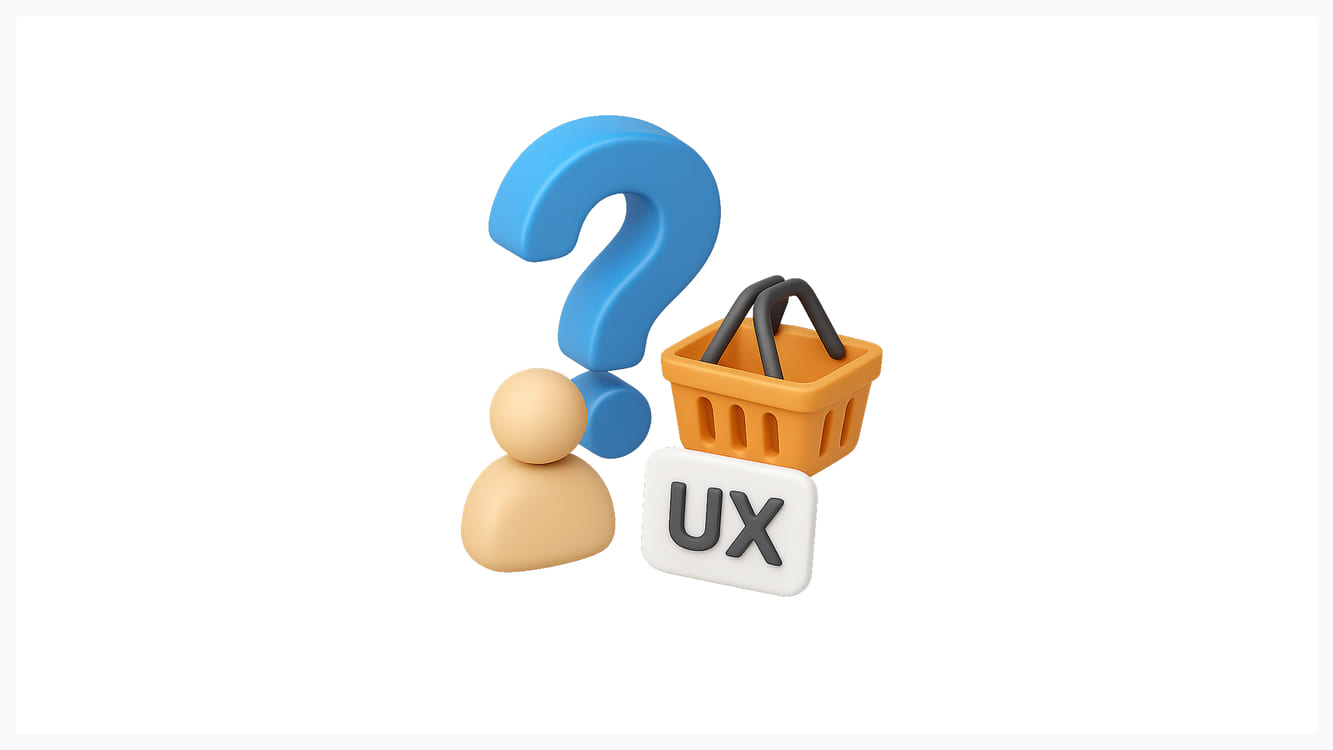
The most useful way to separate the two is by the kind of data each relies on. Market research leans on attitudinal data: what people say they think, want and would do. User research leans on behavioral data: what people actually do when they try. Nielsen Norman Group uses this split as one of the main axes in its overview of UX research methods.
Both kinds of data are valuable, and they often disagree. People say they want more features and then use three. They say price is the deciding factor and then choose the tool their colleague recommended. They rate an onboarding flow as "easy" in a survey and then fail to complete it in a test.
That's why a survey can't replace a usability test, and a usability test can't tell you market demand. Five people struggling with your checkout says nothing about how many people will want your product. A thousand survey responses saying they'd "definitely use" a feature says little about whether they will.
Where they overlap
The line between the two isn't the method. Interviews, surveys and even A/B tests show up in both. What separates them is the question you're asking and how you analyze the answers.
> * An interview about how a company chose its last software vendor is market research. An interview about how someone processes invoices every week is user research.
> * A survey measuring willingness to pay is market research. A survey asking existing users which task takes them longest is closer to user research.
> * An A/B test on ad headlines is marketing. An A/B test on two onboarding flows is product and UX.
Some of the most useful work sits right in the middle. Jobs-to-be-done interviews, for example, explore both why people switch products and how they get their work done, and feed positioning and product design at the same time.
Which one do you need?
Start with the decision you need to make, not the method you know.
A short set of questions helps before any study: What decision will this research inform? What do we already know, and how confident are we? Do we need breadth (how many) or depth (why and how)? Are we validating something we believe, or exploring something we don't understand yet?
How startups can combine both on a small budget
Most startups don't have a research team. They don't need one to get the basics right, as long as each stage gets the research it actually needs.
Pre-seed: is the problem real? Combine lightweight market research (desk research on competitors and alternatives, rough sizing from public data) with ten to fifteen problem interviews with people in your target group. You're checking that the problem exists, that people already spend time or money on it, and what they use instead.
Seed: can people use what we built? Shift weight to user research. Test the core flow with five to eight users before building it, watch session recordings after launch, and talk to people who signed up but didn't activate. Keep an eye on the market through competitor tracking and sales conversations.
Series A: where do we grow? Market research becomes important again: new segments, pricing changes, expansion into new markets. User research becomes continuous, with regular interviews and testing tied to the roadmap. This is often the point where a dedicated researcher or an outside partner pays off.
At every stage, the cheapest research is the one that prevents building the wrong thing. If you need help planning or running studies, our UX research team works with startups on exactly these questions. For more on the methods themselves, see our guides to design research and B2B user research, or our list of UX research firms if you're comparing partners.
FAQ
Is user research part of market research?
No. They overlap in some methods, but they answer different questions. Market research studies markets, segments and buying decisions. User research studies how people use products and what gets in their way. Most companies need both, often run by different teams.
Can you give an example of user research?
A team building an invoicing tool asks six freelancers to create and send an invoice using a prototype, while observing where they hesitate or make mistakes. The team learns that users want to copy previous invoices and that one field is confusing, and changes the design before development.
Who is responsible for each type of research?
Market research usually sits with marketing, product marketing or strategy teams. User research usually sits with product and design teams or dedicated UX researchers. In startups, founders and product managers often do both, which makes it even more important to keep the questions separate.
Is AI going to replace UX researchers?
AI tools now help with transcription, tagging and summarizing interviews, and with recruiting and analyzing surveys faster. They don't replace observing real people doing real tasks, choosing the right questions or deciding what the findings mean for the product. Research gets faster, but judgment stays human.



Related Articles Prompted by Glow









Get weekly glow prompts—
insights from the frontline of product design
Check your inbox for future updates.

No spam.
Just sharp insights that make you better at design & AI.
Want results like this? Book a call
Let’s talk through your product in 30 minutes — no briefs, no fluff. Or start with a free 3‑day trial: one real screen from your product in 3 working days. No card, no contract.