What is Holistic Design?


In today's world of digital products, users expect more than just functionality; they want a holistic, well-thought-out experience when interacting with apps and websites.
In today's world of digital products, users expect more than just functionality; they want a holistic, well-thought-out experience when interacting with apps and websites. Holistic design is a comprehensive approach to design. It views a digital product as an ecosystem where all elements are interconnected and work toward a common goal. Instead of creating separate screens or features, designers think about the entire user journey, their emotions, needs, and the context in which they use the product.
This approach helps create deeper and more meaningful interactions between users and products. When all parts of the system work harmoniously together, users get a more intuitive and enjoyable experience that fits naturally into their lives. The holistic approach also takes into account the company's business goals, technical capabilities, and limitations. This makes the final product not only enjoyable for users, but also an effective tool for achieving business results.
Defining Holistic Design in UX

UX design has traditionally focused on creating user-friendly interfaces for specific tasks or screens, but holistic design takes a broader view. It combines all aspects of the user's interaction with the product into a coherent journey. This includes visual elements, processes, communication, emotions, and even the physical sensations of using the product.
Our design agency, Glow, helps startups, growing companies, and unicorns improve their product metrics. It defines holistic design as a strategic approach that combines user experience, business goals, and technical capabilities. The holistic design approach puts people at the center of the process, while not forgetting about business needs and technological realities. This balance allows us to create products that deliver value to all stakeholders.
How Holistic Design Differs from Traditional UX
The traditional approach to UX design often resembles the creation of separate islands of functionality, where each screen or feature is designed as a standalone element. Designers work on solving specific problems or tasks, sometimes losing sight of the big picture. It can lead to an inconsistent experience where different product parts don't work together.
In contrast, a holistic approach views the product as a single organism where all parts are interconnected and influence each other. Designers start by understanding the entire system and the product's place in the user's life, then work out the individual elements. This approach ensures consistency and integrity at all levels of the product, from visual style to interaction models and communication tone.
Core Principles of Holistic Design
The first principle of holistic design is the unity of purpose and concept across the entire product. Every interface element, every interaction, and every message should work toward a common goal and reflect a unified vision for the product. When all elements speak the same language, users understand the product more easily and achieve their goals faster.
The second principle is a contextual understanding of the user and their environment. Using a holistic approach, UX design considers where, when, and how people use the product. It includes the physical environment, emotional state, devices, attention span, and many other factors influencing the interaction experience.
The third principle of the holistic approach is systems thinking and understanding interrelationships. Designers must see how changing one part of a product affects all other components and the overall user experience. It requires in-depth analysis and modeling of possible product use scenarios in different situations.
The fourth principle is continuous product development and adaptation based on feedback and changes in user behavior. Holistic design does not end with the launch of a product, but continues to evolve along with user needs and business goals. It requires continuous data collection, analysis, and a willingness to make changes.
Real-World Examples of Holistic Design
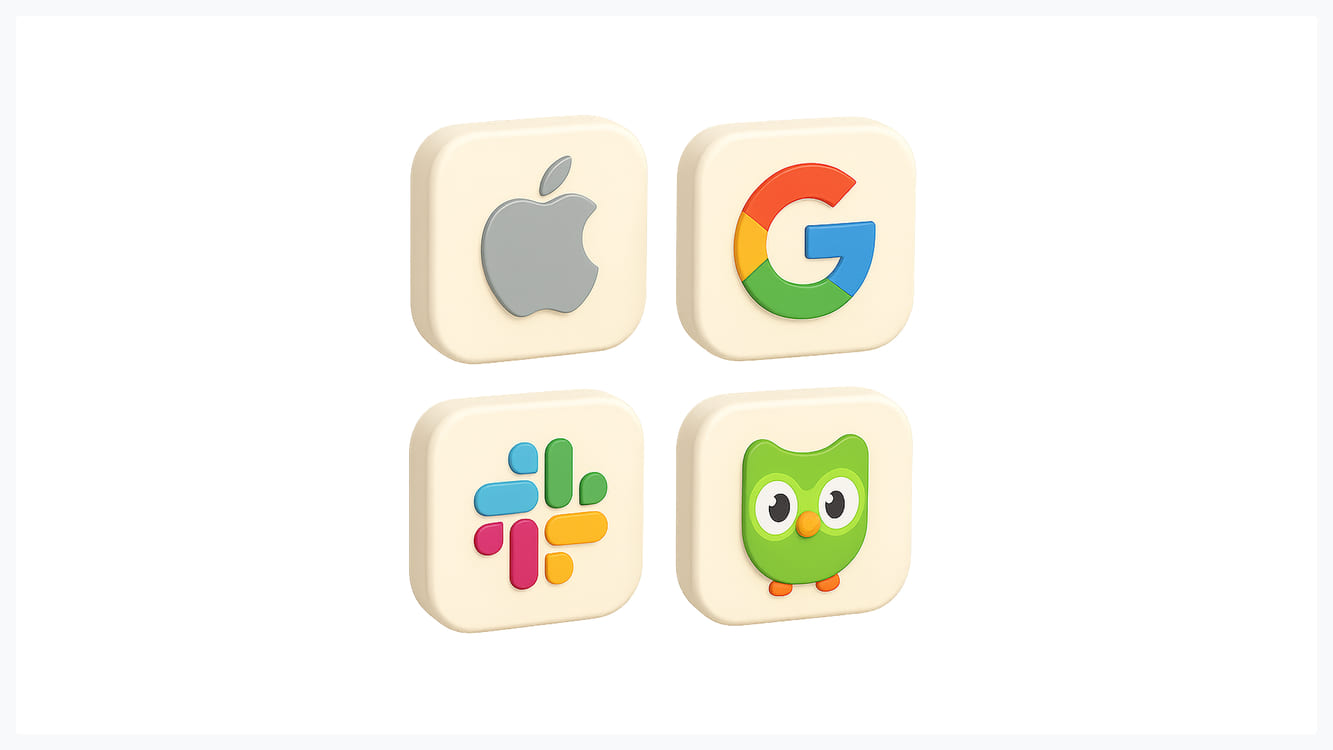
Apple: Ecosystem and Brand Consistency
Apple is the gold standard of holistic design in the tech industry, creating an ecosystem where all products and services work together seamlessly. The iPhone, iPad, Mac, Apple Watch, and AirPods use the same visual language and provide a seamless transition between devices. You can start writing an email on your iPhone and continue on your Mac, or automatically unlock your computer with your watch.
Apple's holistic approach extends to physical stores, product packaging, and online support. Wherever you interact with the brand, you get a consistent experience that reflects the company's values: simplicity, elegance, and attention to detail. This consistency builds trust in the brand and creates loyal users who are happy to stay in the Apple ecosystem.
Google: Material Design Philosophy
Google created the Material Design philosophy to embody holistic design principles for its many products and services. These visual language and interaction principles ensure a consistent experience across platforms and devices. Material Design is based on the metaphor of physical materials and their behavior in the real world, making interactions intuitive.
UX design based on Material Design principles considers not only visual aspects, but also movement, depth, light, and the physical characteristics of interface elements. This creates a sense of the real world in the digital space and helps users easily navigate Google products.
This approach demonstrates how a unified design philosophy can be scaled across multiple products while maintaining the integrity of the experience.
Slack: Integrated Team Communication
Slack is an excellent example of applying a holistic design approach in a team communication product. Instead of creating another messenger, Slack designed a holistic ecosystem for teams to work together, where communication, tasks, documents, and other workflows are integrated into a single space. The product considers the context of different teams and offers flexible tools that can be adapted to different needs.
The holistic approach is evident in how Slack integrates with other tools and services through APIs and extensions. Glow notes that Slack's success is due to its holistic understanding of teamwork, not just its user-friendly interface. The product considers team culture, work processes, and the specifics of different roles, creating a cohesive environment for collaboration.
Duolingo: Gamified Learning Experience
Duolingo demonstrates the power of holistic design in educational products by creating a holistic language learning experience. Instead of simply presenting learning material, the app offers an ecosystem of motivation, learning, and social interaction. Every element, from gamification and visual style to the reminder system, works toward making language learning effective and fun.
UX design at Duolingo is based on a deep understanding of the psychology of motivation and learning processes. The app uses short lessons, an achievement system, competitions with friends, and helper characters to keep users engaged. This holistic approach helps solve the main problem in language learning: maintaining long-term motivation and regularity.
How Holistic Design Changes the Designer's Role

Seeing the Bigger Picture
The designer's role in holistic design goes far beyond creating interfaces and visual elements. Designers must see the bigger picture, understanding how their work affects the overall user experience and the achievement of business goals. This requires strategic thinking and deep immersion in the context of the product's use, audience, and business needs.
Holistic approach changes the design process, starting not with individual screens and features, but with establishing a common vision and principles for the product. Designers ask fundamental questions: Why does this product exist? What problems does it solve? How does it fit into users' lives? What emotions does it evoke? Only after answering these questions do they move on to developing specific solutions.
Being a Bridge Between Departments
Designers working with a holistic design approach become a link between different departments of the company: the product team, developers, marketers, and business analysts. They must speak the language of different specialists and translate technical, business, and user requirements into a unified product vision. This communication role is critical to creating a truly holistic product.
UX design in this paradigm requires creative skills and the ability to facilitate collaboration, manage the expectations of various stakeholders, and find compromises between conflicting requirements. Designers must gather information from different departments, synthesize it, and transform it into a consistent user experience that meets all requirements.
Adopting a Systems Mindset
Working with holistic design requires designers to develop systems thinking-the ability to see the connections between different product elements and understand how they influence each other. This means designing not individual screens and features, but entire systems of interactions that work coherently across all use cases.
A holistic approach requires the creation of design systems and patterns that can scale and adapt to different contexts while maintaining the integrity of the experience. Designers should think of their work as building a construction set from which they can create different solutions while remaining within the framework of a single concept and product philosophy.
Final Thoughts: Why Holistic Design Matters in Modern UX

In an era where users interact with brands through multiple touchpoints and devices, holistic design is becoming desirable and necessary. People expect a cohesive and consistent experience that doesn't break when they switch between different channels and contexts of use. Companies that fail to deliver this experience risk losing users who switch to more integrated solutions.
UX design based on a holistic approach forms an emotional connection with users that goes beyond simple functionality. Users feel understood when a product or service is perceived as a unified whole, and their time and effort are valued. This creates brand loyalty and increases users' likelihood of recommending the product to others.
A holistic design approach also brings business benefits, including higher conversion rates, user retention, and average check size. When all touchpoints work toward a common goal, every step of the user journey becomes more effective, ultimately leading to better business results. Glow and other leading design agencies regularly note a direct link between holistic design and improvements in key product metrics.
In the future, the importance of a holistic approach will only increase as the boundaries between the digital and physical worlds become increasingly blurred. The Internet of Things, smart homes, wearable devices, and other technologies are creating an even more complex ecosystem of human interaction with digital products. In this context, a holistic approach to design is becoming the only way to deliver a truly meaningful and valuable user experience.


.svg)

Related Articles Prompted by Glow










Get weekly glow prompts—
insights from the frontline of product design
Check your inbox for future updates.

No spam.
Just sharp insights that make you better at design & AI.
Want results like this? Book a call
Let's talk through your product in 20 minutes — no briefs, no fluff. Just a real conversation.