Product Designer vs. UX Designer: Understanding the Key Differences


AI Summary. What’s included?
This article explains the key differences between a Product Designer and a UX Designer. UX Designers focus on user research, usability, and information architecture. Product Designers cover all of that plus visual UI design, design systems, and business strategy. Product Designers typically earn 10–20% more. Startups with limited headcount benefit most from hiring a Product Designer, while complex enterprise tools may call for a dedicated UX specialist.
Confused about Product Designer vs. UX Designer roles? Learn the key differences in responsibilities, required skills, and salary expectations to make the right hiring decision for your product team.
In the tech industry of 2026, job titles often feel like moving targets. You open a job board, and suddenly everyone is a “Digital Experience Architect” or a “User Empathy Specialist.” But when it comes to building actual software, the debate of Product designer vs UX designer is one of the most common — and most consequential — conversations founders and hiring managers have today.
Is it just a matter of semantics? Absolutely not. While the lines between these roles can occasionally blur (especially in early-stage startups where everyone wears multiple hats), they represent fundamentally different approaches to building digital products. One role focuses obsessively on the user’s journey, while the other balances that user journey with hard business objectives, visual execution, and market strategy.
Getting this choice right determines whether your digital platform just functions decently or whether it actually drives revenue and retains customers. Do you want to break down the exact responsibilities, the distinct mindsets, and the earning potential of both paths? Glow Team is ready to help you understand the nuances of the modern design landscape.
Quick Summary (Key Takeaways)
Product Designers generally earn higher salaries than UX Designers, with US averages around $100,000-$140,000+ compared to $80,000-$120,000+ for UX Designers. While entry-level salaries are similar, Product Designers command more due to their broader responsibility for business strategy and the full product lifecycle.
Product Designer vs. UX Designer Salaries (US-Based):
- Product Designer (Average): $95,000 — $140,000+ annually.
- UX Designer (Average): $80,000 — $120,000+ annually.
- Senior Roles: Both can exceed $150,000, but Senior Product Designers often reach higher thresholds (up to $197,000+).
Key Factors Influencing Compensation:
- Scope of Work: Product Designers blend UX, UI, and business strategy.
- Company Type: Product Designers are typically in product-focused SaaS; UX designers are common in agency settings.
Which Role Pays More? Yes, Product Designer. They frequently earn 10-20% more, as they are viewed as having a more direct impact on product success and business goals.
What is a UX Designer? (The User’s Advocate)
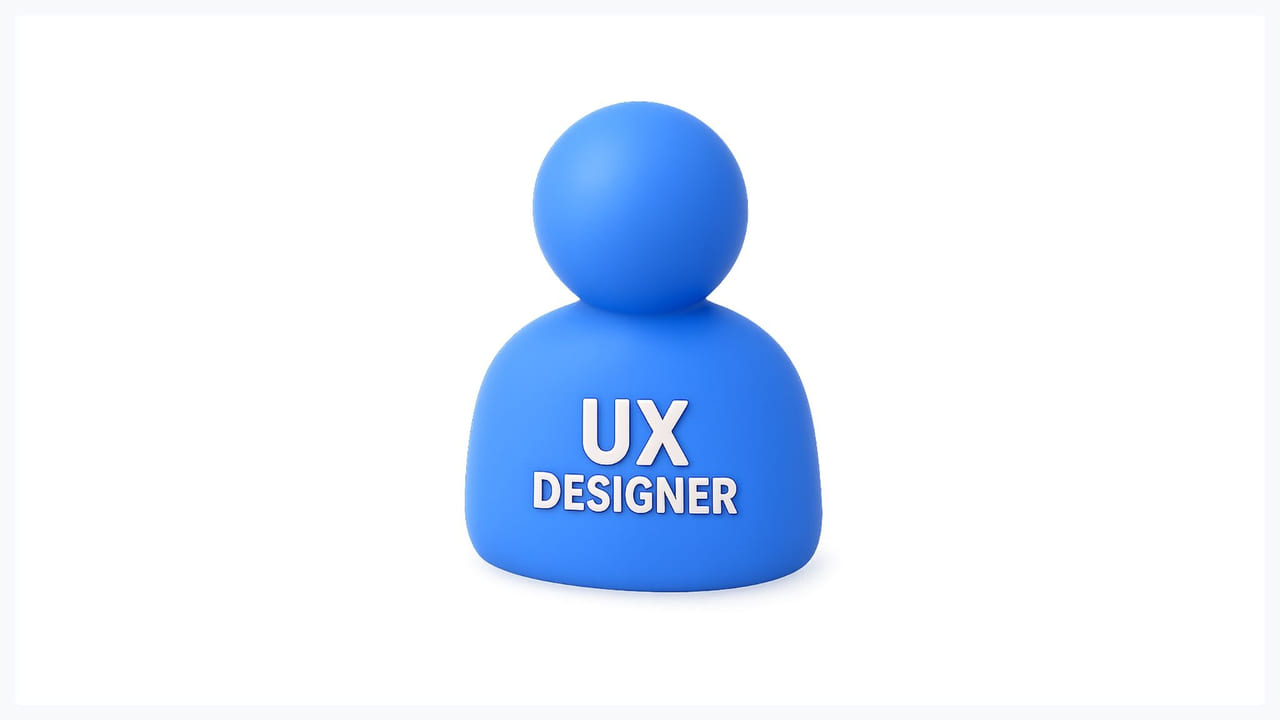
To truly grasp the nuances of Product design vs UX design, we have to start with the foundation: User Experience (UX). A UX Designer is fundamentally the user’s primary advocate within a company. Their main goal is to ensure that a digital product is logical, highly usable, and solves the user’s specific problem with the absolute minimum amount of friction.
They are the architects of the experience. Before a single color is chosen or a typography scale is set, the UX designer is deep in the trenches, figuring out how a human being will navigate from Point A to Point B without getting frustrated. For instance, if you are creating a great blockchain UX, a UX designer is the one making sure complex seed phrases and gas fees don’t terrify a first-time user. They build the invisible skeleton that holds the entire application together.
Key Responsibilities
A typical week for a UX Designer is highly analytical and research-heavy. Their core responsibilities include:
- User Research: Conducting extensive interviews, surveys, and competitive analysis to understand target demographics.
- Creating Personas: Building detailed user profiles that represent the target audience, helping the entire team empathize with the end-user.
- Wireframing and Prototyping: Sketching out low-fidelity layouts and clickable prototypes that map out the structural flow of the application.
- Usability Testing: Watching real users interact with prototypes to identify bottlenecks, confusion points, and areas for improvement.
- Information Architecture: Organizing content in a way that makes intuitive sense, so users never have to guess where to click next.
Furthermore, accessibility is a crucial part of UX. A dedicated UX designer ensures that digital products are navigable for everyone, mapping complex user journeys to guarantee that, whether a customer is completing a purchase or resetting a password, the experience feels entirely effortless.
The Mindset
The internal monologue of a UX Designer is entirely user-centric. They are constantly asking questions like: “Is this easy to use? Does it make sense to the user? How many clicks does it take to complete this task? Where might someone get confused?” They rely on empathy as their primary tool, prioritizing clarity over aesthetics every single time.
What is a Product Designer? (The Business Advocate)
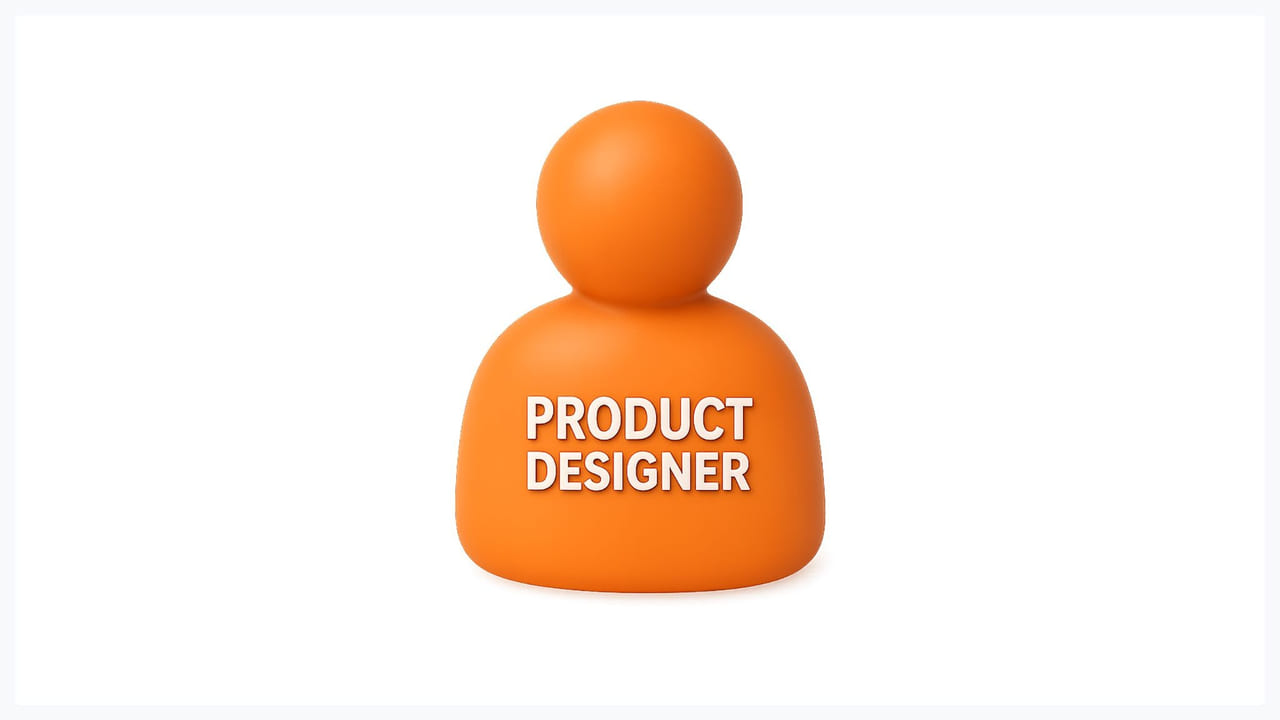
If the UX Designer is the architect, the Product Designer is the general contractor, the interior designer, and the real estate strategist all rolled into one. When examining Product design vs UX design, the defining characteristic of a Product Designer is that their role encompasses UX, but it aggressively adds visual UI design and business strategy to the mix.
A Product Designer oversees the entire product lifecycle, from initial idea to post-launch iteration. At Glow Team, we often emphasize that great design is not just about looking good; it is about driving growth. A Product Designer doesn’t just want the user to click a button easily; they want to know why that button click improves the company’s bottom line. They are deeply invested in the economic realities of the software they are building.
Key Responsibilities
Because their scope is end-to-end, a Product Designer’s day is incredibly varied. Their responsibilities include:
- Aligning Design with Business KPIs: Ensuring that design decisions directly positively impact metrics like Monthly Recurring Revenue (MRR), customer retention, and churn rates. If you are curious about how this is measured, check out our guide on design KPIs and metrics.
- High-Fidelity UI Design: Moving beyond wireframes to create pixel-perfect, production-ready visual designs. This means obsessing over brand consistency — ensuring strict branding accuracy with proper logo placement across all touchpoints, and standardizing visual assets, such as utilizing a consistent horizontal 16:9 aspect ratio for all blog-related graphics rather than relying on disjointed square or vertical imagery.
- Design System Management: Building robust, scalable component libraries to ensure that as the SaaS platform grows, the visual language remains consistent.
- Continuous Iteration: Analyzing market feedback, heatmaps, and product analytics post-launch to tweak and improve the interface continuously.
The Mindset
The mindset of a Product Designer is a delicate balancing act. While they care deeply about the user, their guiding question is: “Does this solve the user’s problem AND achieve our business goals?” They are willing to make calculated trade-offs. If a slightly more complex user flow leads to a massive increase in enterprise sign-ups, the Product Designer will strategically optimize for that business outcome while mitigating as much user frustration as possible.
Key Differences: Scope, Skills, and Mindset
To make the best hiring decisions, you need to see how these roles stack up side by side. The debate of Product designer vs UX designer ultimately boils down to three core pillars: scope, skills, and metrics of success.
- Scope of the Role
UX design is often highly focused on specific phases of a project. A UX designer might come in during the discovery phase, conduct deep usability research, establish the user flow, and hand off their wireframes to a UI designer. Their job is often considered “done” once the usability is validated.
Product Design, conversely, is end-to-end. A Product Designer is there on day one for initial brainstorming, designs the final high-fidelity screens, works directly with developers during implementation, and is still there six months later analyzing performance data to plan the next redesign.
- Skill Sets
UX design requires deep empathy, psychological insight, and analytical rigor. It is about understanding human behavior and cognitive load.
Product Design requires a “full-stack” design mentality. It demands a solid foundation in UX, combined with top-tier visual design (UI) capabilities, and a sharp sense of business acumen. A Product Designer needs to know how to read a basic profit and loss statement just as well as they know how to set up complex interactions in the latest interface tools.
- Metrics of Success
This is perhaps the starkest contrast. A UX designer measures success through usability metrics. They look at System Usability Scale (SUS) scores, task completion rates, and time-on-task. If the user completes the flow quickly and without errors, the UX is a success.
Salary Comparison: Who Earns More and Why?
When negotiating budgets or planning a career path, financial realities are a major factor. As we highlighted earlier, there is a clear winner when it comes to compensation. A Product designer’s salary consistently outpaces a UX designer’s salary across most tech hubs in the United States and globally.
But why exactly do Product Designers earn a 10-20% premium?
- First, it is about consolidating talent. When a company hires a Product Designer, they are effectively getting a UX researcher, a UI visual artist, and a junior product manager rolled into one salary. This efficiency is incredibly valuable, especially in fast-moving tech environments where leaner teams need to ship updates rapidly.
- Second, compensation is heavily tied to business ownership. Because Product Designers are held accountable for revenue-driving metrics like conversion and retention, their work is perceived as having a more direct, measurable impact on the company’s valuation. When you can definitively prove that your redesign increased trial conversions by 15%, you have massive leverage to negotiate a higher Product designer salary.
- Finally, company type plays a huge role. You will find brilliant UX designers thriving in specialized agencies (like many of the top B2B web design agencies in the US), where they tackle complex system architectures for various clients. However, Product Designers are heavily concentrated in well-funded, product-focused SaaS companies in Silicon Valley and beyond, which naturally boast higher compensation packages. When comparing a Product designer vs UX designer, the specific corporate environment they work in dictates a large portion of their earning potential.
Which Role Should a Company Hire?
Knowing the nuances of Product design vs UX design is only helpful if it leads to the right hiring decision. If you are a founder, a marketing director, or a product manager staring at a limited budget, how do you choose?
- Hire a UX Designer when:
You are building an incredibly complex, data-heavy system where the primary hurdles are logic and navigation. If you are developing enterprise software for the healthcare sector, a highly technical logistics dashboard, or a specialized financial compliance tool, you need someone who will dedicate 100% of their time to deep research and usability testing. You need a dedicated user advocate to unravel the complexity before any visual design begins.
- Hire a Product Designer when:
You are running a SaaS startup that needs end-to-end execution. If you need someone who can take a rough idea, map out the user flow, design a beautiful, modern UI, and ensure the whole thing aligns with your quarterly revenue goals, you need a Product Designer. They are the ideal choice for startups that need versatile, strategic thinkers who can ship complete features rapidly without losing sight of the brand identity.
Conclusion: Two Sides of the Same Coin
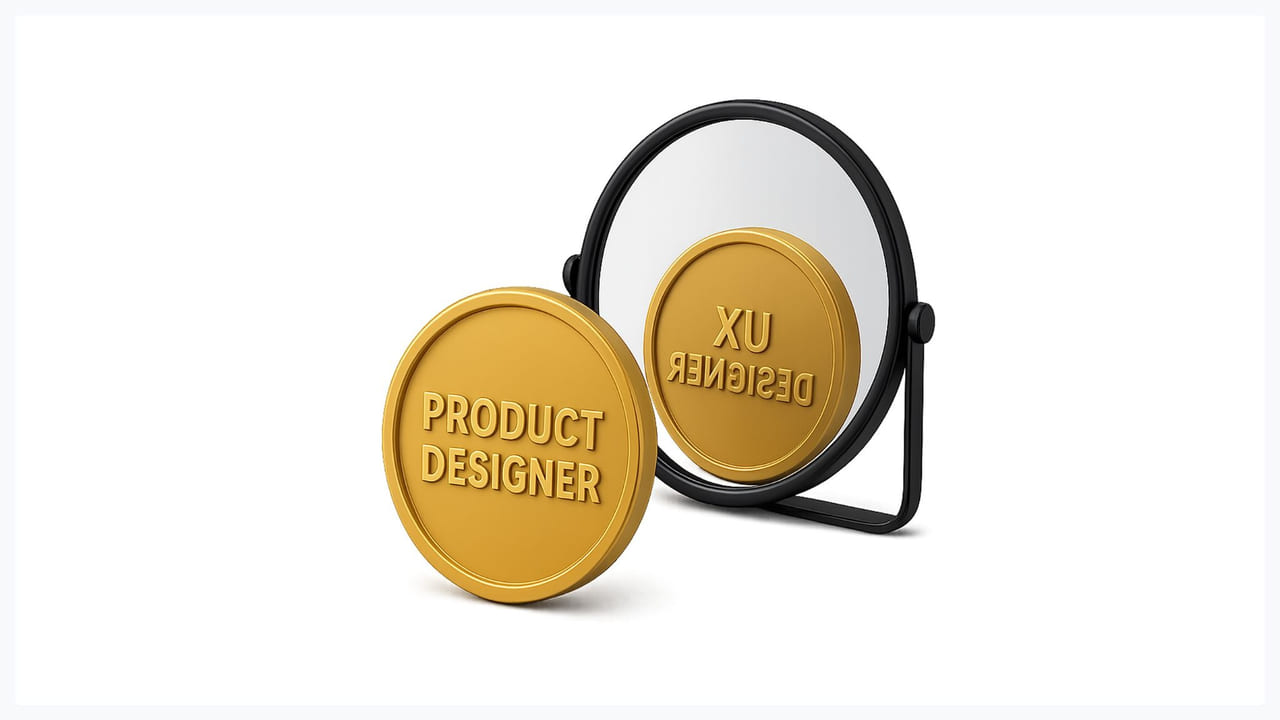
Ultimately, the conversation around a Product designer vs UX designer shouldn’t be about which role is inherently “better.” Both are absolutely crucial to the modern digital economy. As technology continues to evolve in 2026, the demand for highly usable, beautiful, and profitable software will only grow exponentially.
Whether you are a designer looking to maximize a Product designer salary, a specialist comfortable with a robust UX designer salary, or a founder trying to scale your next big idea, understanding these distinctions is your key to success. UX design builds the logical foundation that users trust, while Product design builds the strategic engine that businesses need to thrive. They are two sides of the same coin, and mastering how they interact is the secret to building digital products that truly glow.

.svg)

Related Articles Prompted by Glow







Get weekly glow prompts—
insights from the frontline of product design
Check your inbox for future updates.
No spam.
Just sharp insights that make you better at design & AI.
Want results like this? Book a call
Let's talk through your product in 20 minutes — no briefs, no fluff. Just a real conversation.