How Does Design Play a Key Role in Marketing? (2026)


Learn how design shapes brand identity, drives engagement, and converts audiences - and why marketing without strategic design consistently underperforms.
In most companies, design and marketing sit in separate rooms - sometimes separate buildings, often separate budgets. Marketing writes the strategy, design makes it pretty, and the handoff happens over a brief that neither side fully understands. The result is campaigns that either look good but say nothing, or say the right thing in a way nobody wants to look at.
The best brands refuse this split. They treat design and marketing as a single discipline with two skill sets. Marketing defines the who, what, and why; design translates that into the how - the visual language that carries the message into the world. Neither works at full potential without the other. Understanding how does design play a key role in marketing is not an academic exercise; it is the operational insight that separates brands people remember from brands people scroll past.
Quick Summary (Key Takeaways)
Core Relationship: Marketing defines strategy (who, what, why) - design translates it into visuals (how). Neither works at full potential without the other.
6 Key Ways Design Drives Marketing: Brand Identity · Digital Engagement · UX & Conversion · Emotional Connection · Competitive Differentiation · Content Digestibility
Asset Type Purpose Website & Landing Pages UX, conversion, first impression Social Media Graphics Engagement, brand awareness Digital & Print Ads Reach, CTR, campaign performance Email Templates Retention, consistent brand touchpoint Branding Materials Trust, long-term recognition
Website & Landing Pages
- PurposeUX, conversion, first impression
Social Media Graphics
- PurposeEngagement, brand awareness
Digital & Print Ads
- PurposeReach, CTR, campaign performance
Email Templates
- PurposeRetention, consistent brand touchpoint
Branding Materials
- PurposeTrust, long-term recognition
Design vs. Marketing: Understanding the Difference
The distinction between design and marketing is not a rivalry - it is a relay. Each discipline carries the baton for a different leg of the same race. Blurring the line between them is where the magic happens.
What Marketing Does
Marketing owns the strategic layer: audience research, segmentation, positioning, messaging frameworks, channel selection, campaign planning, and performance measurement. It answers the question "What do we need to say, to whom, and where?"
What Design Does
Design owns the experiential layer: the visual and interactive translation of strategy into assets people actually see, touch, and use. Logos, landing pages, ad creatives, email layouts, social graphics, packaging - every tangible expression of the brand comes through design. It answers the question "How does the message look, feel, and behave?"
Where They Overlap - Marketing Design
The overlap produces a hybrid role increasingly known as marketing design - designers who think strategically about conversion and audience psychology, and marketers who think visually about layout, hierarchy, and brand consistency. This intersection is where campaigns become cohesive rather than collaged. When both sides understand each other's constraints and goals, the work improves dramatically. Agencies that bridge product design and business strategy naturally operate in this overlap, which is why their marketing assets tend to feel more integrated than work produced in a traditional handoff model.
6 Key Ways Design Drives Marketing Results
The role of design in marketing is not decorative. It is structural. Here are six ways design directly drives business outcomes.
1. Design Builds and Reinforces Brand Identity
Research suggests people form opinions about a brand within seconds - and the majority of that snap judgment is based on color alone. A consistent visual identity - logo, color palette, typography, imagery style - repeated across every touchpoint builds the kind of recognition that money alone cannot buy. Every time a user encounters a consistent visual, the brand becomes a little more familiar, a little more trusted.
Marketing design ensures that brand elements are not just defined but deployed - consistently, across every channel, at every scale. A brand guideline sitting in a shared drive is inert; a brand system actively applied to every ad, email, and social post is a compounding asset.
2. Visuals Fuel Digital Engagement
Social platforms are visual-first environments. Posts with images generate significantly more engagement than text-only posts. Video outperforms static images. And designed, branded visuals outperform generic stock photography by a wide margin.
The role of design in marketing on social channels is not just about making things look good - it is about stopping the scroll. A well-composed graphic with strong contrast, clear hierarchy, and a brand-consistent color palette earns the fraction of a second of attention that determines whether a user pauses or keeps swiping.
3. Design Enhances UX and Drives Conversion
A landing page is both a marketing asset and a design artifact. The headline may be perfect, the offer compelling, and the targeting precise - but if the layout is confusing, the CTA is buried, or the page loads slowly on mobile, the conversion rate suffers. Design and marketing converge most visibly on landing pages, where every pixel serves a measurable business goal.
Teams that simplify navigation and improve user flow consistently see conversion lifts, because design friction is the invisible tax that erodes even the strongest marketing message.
4. Design Creates Emotional Connections
Color psychology, image selection, typographic mood, whitespace - these are not aesthetic preferences. They are emotional levers. Apple's design language communicates aspiration; Red Bull's, raw energy; and a children's brand, warmth and safety. None of these emotions is stated in copy - they are felt through design.
Since most purchasing decisions are driven by emotion rather than logic, the role of design in marketing extends far beyond information delivery. It shapes how the audience feels about the brand before the rational mind even engages. Understanding how psychology drives UX decisions helps design teams make these emotional calibrations with precision rather than intuition.
5. Design Differentiates You From Competitors
In saturated markets, features converge. When every SaaS tool offers roughly the same functionality, the visual identity becomes the primary differentiator. How does design play a key role in marketing differentiation? Through a distinctive design system - unique illustration style, proprietary color palette, custom iconography - that creates a visual moat competitors cannot replicate without looking like copycats.
Commodity products break out of commoditization through design. Think of how Mailchimp's playful illustration style or Stripe's gradient aesthetic made functional products feel like premium brands. Marketing design at this level is not decoration; it is positioning made visible.
6. Design Makes Complex Content Digestible
A ten-page white paper reaches hundreds. The same insights, distilled into a single infographic, reach thousands. The role of design in marketing content is increasingly about compression: data visualization, icon systems, and visual summaries transform dense content into shareable, scannable assets that extend the reach of marketing investments.
This is where design and marketing create a multiplier effect: marketing produces the insight, design packages it for consumption, and the combined asset performs better than either discipline could achieve alone.
Types of Design Used in Marketing

Not all marketing design is created equal. Different channels demand different design specialties:
- Graphic design. The foundation - logos, brand collateral, print materials, presentation decks. Every other design type builds on this base.
- Web and landing page design. The primary conversion engine for digital marketing. Includes homepage design, campaign-specific landing pages, and microsites. Teams that approach web design from a product design perspective build pages that perform as well as they look.
- UX/UI design. Extends beyond marketing into the product itself, but marketing touchpoints like onboarding flows, in-app prompts, and pricing pages all require UX thinking. A structured UX framework ensures marketing surfaces inside the product receive the same rigor as external campaigns.
- Motion graphics and video. Video drives roughly 3 times the engagement as static content. Animated explainers, social ads, brand films, and product demos are increasingly central to marketing strategy - and they require design skills that go beyond static layout.
- Email design. The most underrated marketing channel in terms of design impact. A well-designed email template - responsive, brand-consistent, with a clear visual hierarchy - can lift open rates, click-through rates, and ultimately revenue per send.
- Social media design. Each platform-native format (Stories, Reels, carousel posts) has distinct design requirements. Effective social marketing design adapts the brand system to the constraints of each format without losing consistency.
6 Design Mistakes That Hurt Marketing Performance
Even strong brands sabotage their marketing with avoidable design errors:
- Overloading with information. Cramming every feature and benefit onto a single landing page or ad overwhelms the viewer and dilutes the message. Edit ruthlessly; let whitespace do its work.
- Neglecting mobile. More than half of web traffic is mobile. A campaign that looks polished on a desktop but broken on a phone wastes half its budget.
- Ignoring color psychology. Colors trigger emotional associations. Using a high-energy red for a meditation app or a somber gray for a children's product sends a conflicting signal that undermines the message before it is read.
- Designing for the wrong audience. A visual style that resonates with Gen Z will alienate a C-suite buyer, and vice versa. Design decisions should be informed by audience research, not personal taste.
- No visual hierarchy. When everything on the page is bold, nothing is bold. A clear hierarchy - primary headline, supporting visual, call to action - guides the eye and drives the desired action.
- Ineffective CTA design. A call to action that blends into the background, uses vague copy, or sits below the fold is a conversion leak. The CTA should be the most visually prominent element on any marketing asset.
5 Marketing Design Tips That Actually Work
Build a design system first. Before creating a single campaign asset, establish a design system: colors, type scale, spacing rules, and a component library. This investment pays for itself in speed and consistency across every future campaign. Teams that measure design impact through KPIs can quantify exactly how much a design system saves.
Design mobile-first. Start with the smallest screen and scale up. This forces prioritization and ensures the core message survives even the most constrained viewport.
A/B test design, not just copy. Marketers routinely test headlines but rarely test layout, CTA color, or image placement. Design variations can move conversion metrics as much as - sometimes more than - copy changes.
Align design with emotional goals. Before opening Figma, define the emotional response you want: trust, excitement, urgency, calm. Then select colors, imagery, and typography that serve that emotion. This is how design and marketing achieve alignment at the creative level.
Create experiences, not templates. Templates are efficient but forgettable. The campaigns people share, screenshot, and talk about are the ones that feel crafted - where design elevates the message from information to experience.
Marketing Design vs. Product Design
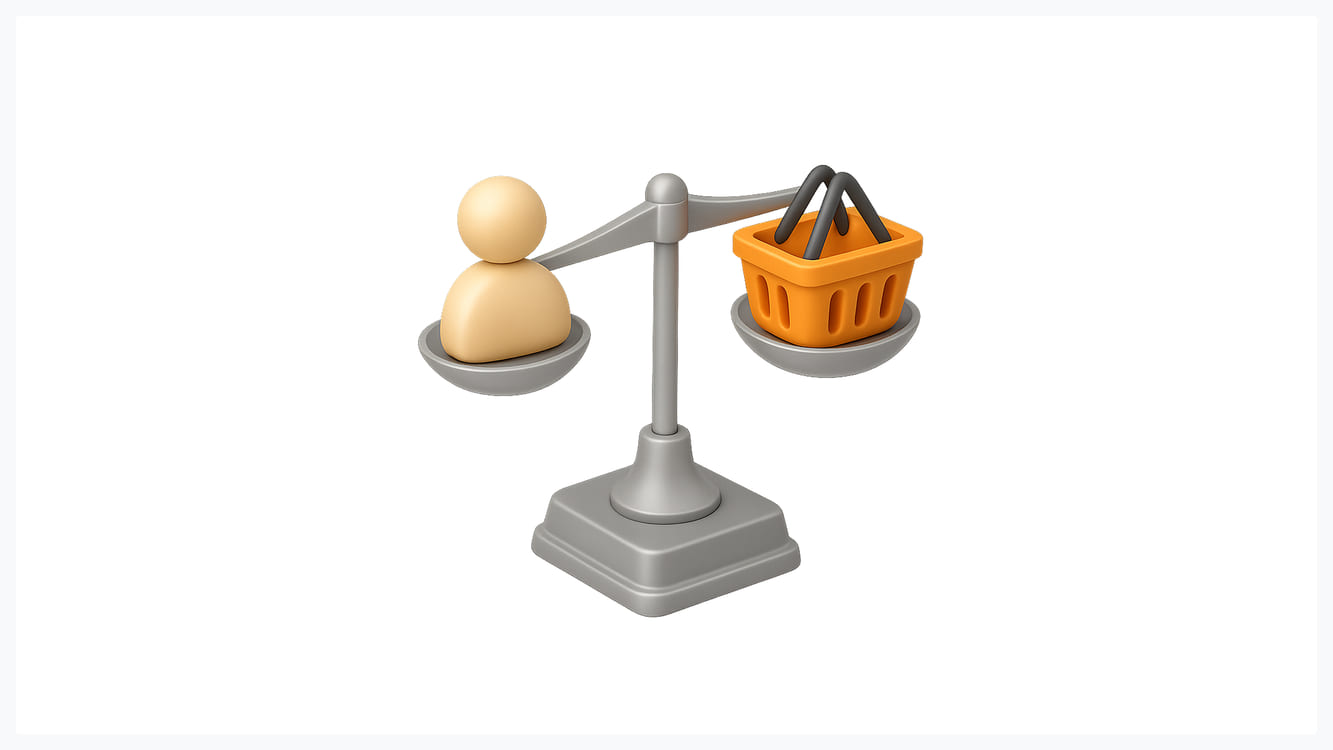
These two disciplines share tools and principles but serve different masters. Marketing design faces outward: it attracts, persuades, and converts people who have not yet used the product. Product design faces inward: it serves people who are already inside the product, optimizing their experience for retention and satisfaction.
Both matter. A brilliant marketing campaign that drives signups to a poorly designed product creates churn. A brilliant product that nobody discovers because the marketing looks amateurish creates obscurity. How does design play a key role in marketing? By ensuring the external promise matches the internal experience - and by making both feel like they come from the same brand. Design partners who work across both domains, like Glow Team, naturally bridge this gap because they design both the marketing surface and the product interface.
Conclusion: When Design and Marketing Think Together, Brands Win

The best campaigns are not born when a marketer writes a brief and throws it over the wall to a designer. They are born when the designer is in the strategy meeting, and the marketer is in the design review - when both disciplines shape the work from the start.
How does design play a key role in marketing? It plays every role that words cannot. It builds recognition before a single headline is read. It creates emotion before the rational argument lands. It guides the eye to the CTA, earns the click, and delivers the user into a product that feels like a continuation of the promise that brought them there.
If your marketing assets feel disconnected from your product, or your campaigns look polished but fail to convert, the problem is almost certainly in the gap between design and marketing - and the solution is closing it. Explore Glow Team's portfolio to see how integrated design thinking translates into products and brands that perform, and discover what happens when design stops being a service department and starts being a strategic partner.

.svg)

Related Articles Prompted by Glow







Get weekly glow prompts—
insights from the frontline of product design
Check your inbox for future updates.

No spam.
Just sharp insights that make you better at design & AI.
Want results like this? Book a call
Let's talk through your product in 20 minutes — no briefs, no fluff. Just a real conversation.