UX research that shows you
what users actually do
Opinions are cheap, user behavior is not. We run interviews, usability tests and journey mapping so your product decisions rest on evidence, not the loudest voice in the room.
UX research is the foundation
of every good design decision
Assumptions are risky. Designing without research is building on assumptions.
Assumptions cost more later. Assumptions about who your users are, what they need, and what stops them from converting are expensive to fix once they're baked into a product.
Evidence changes everything. UX research replaces assumptions with evidence — fewer revisions, faster decisions, products that actually work.
What designing without
research actually costs you

You're solving the wrong problems
Teams routinely build features users don't want and fix friction that isn't where users actually struggle. Research tells you exactly what to prioritize — and what to skip — before a sprint begins.
Expensive rework after launch
Design changes at the wireframe stage cost 10–100× less than the same changes post-launch. Every round of stakeholder-driven revisions that replaces research is money left on the table.


High churn you can't explain
If users leave and you don't know why, you can't fix it. Exit interviews, session analysis, and behavioral research surface the real reasons — not the ones you're assuming.
Features that get built but never used
Without understanding user goals and mental models, new features miss the mark. Research ensures what you build matches what users actually need to stay and grow.
Real-world UX research,
real business impact
Research findings that changed what teams built — and how well it performed.
Research revealed only 12% wanted the planned feature — 70% had a navigation issue instead.
Our UX research methods
We select and combine research methods based on your product stage, your questions, and what the data needs to answer.
User & Stakeholder Interviews
In-depth one-on-one sessions with your users and stakeholders — surfacing goals, mental models, and pain points surveys can't capture.

Behavioral Analytics & Heatmaps
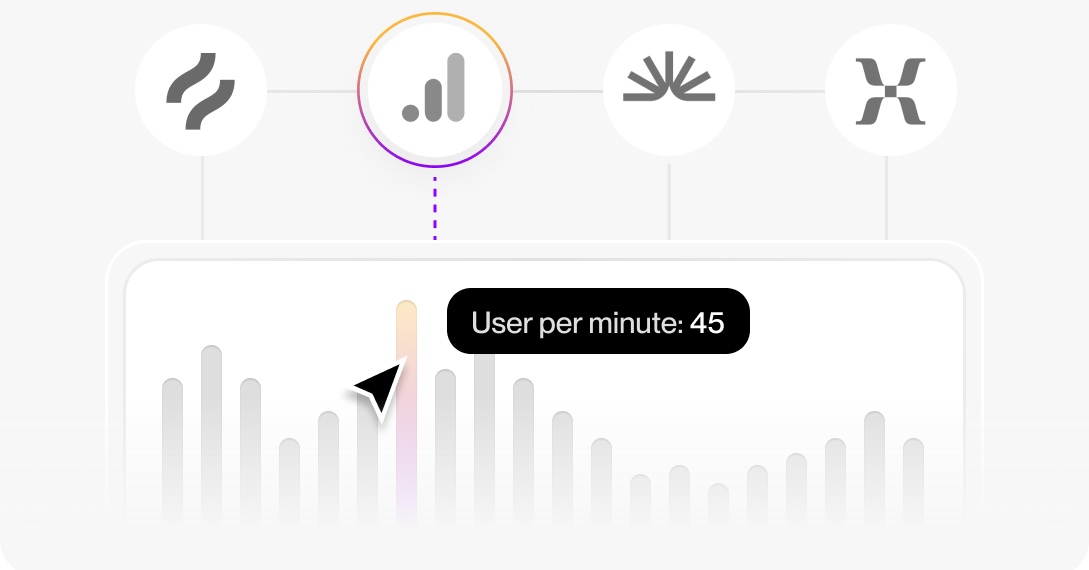
Analysis of your existing data — GA4, Hotjar, Mixpanel, FullStory — to map usage patterns, identify drop-offs, and find hidden friction.
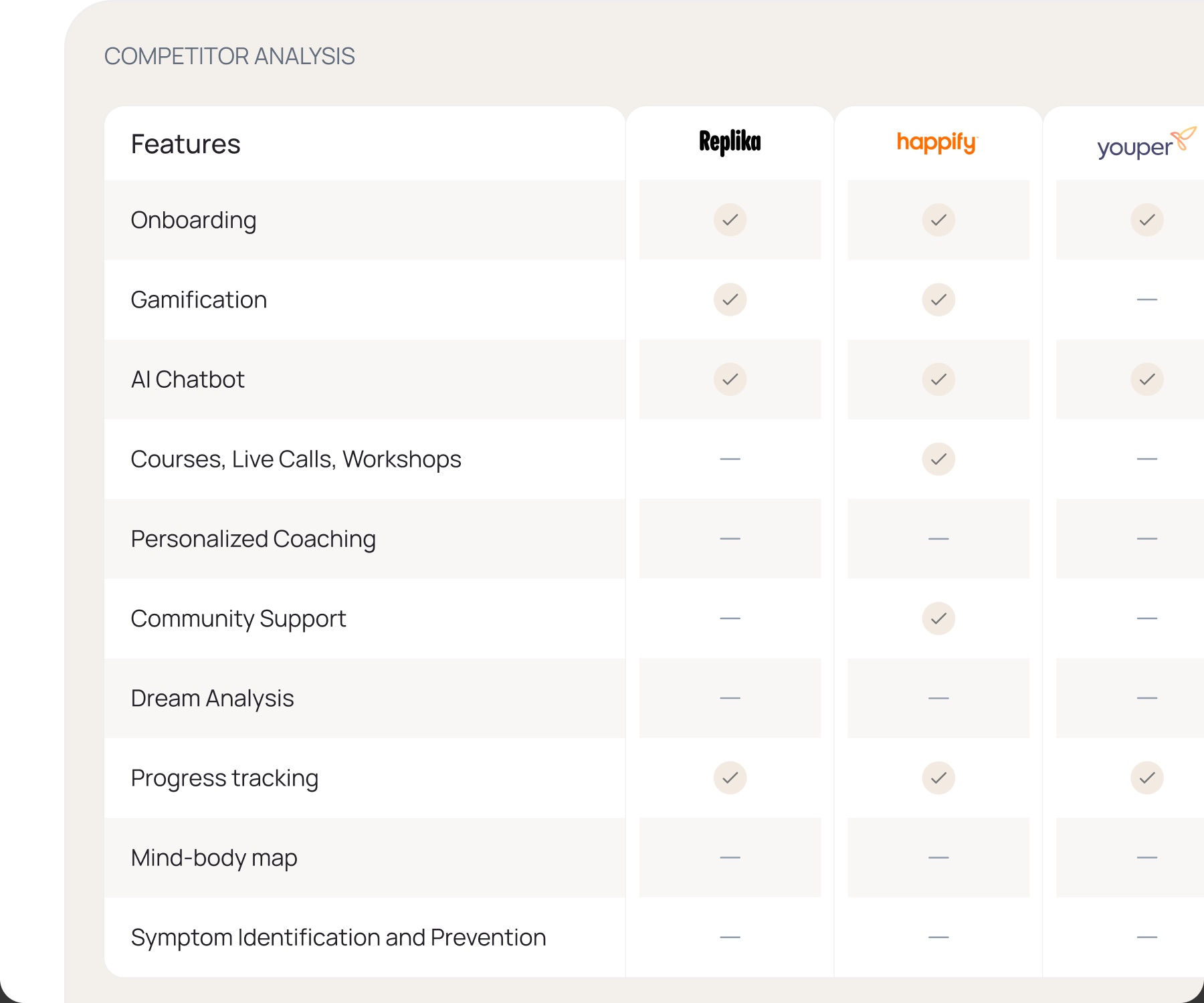
Competitor & Market Analysis
We benchmark your product against competitors — surfacing UX patterns users know, gaps to exploit, and expectations to meet.
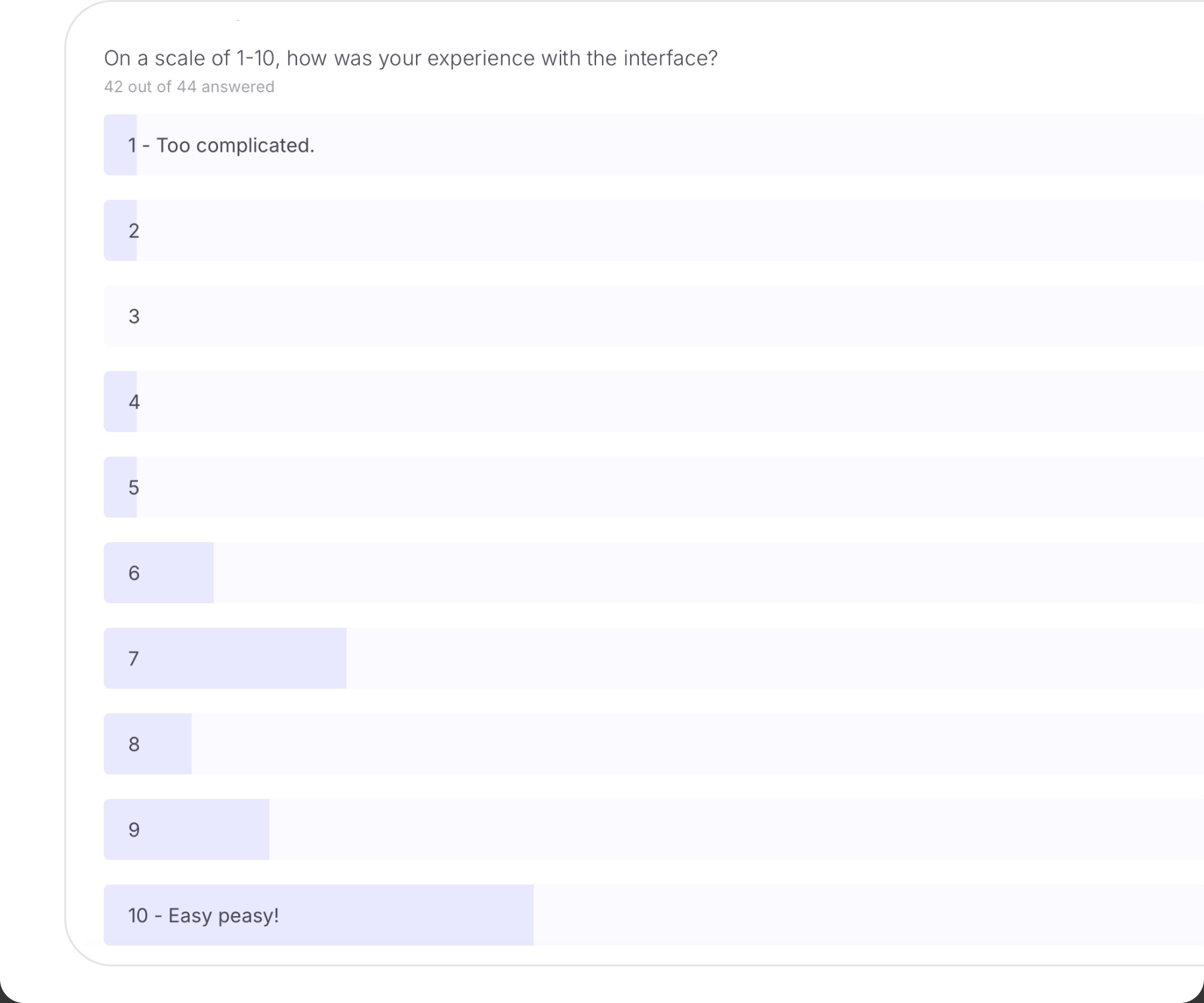
User Surveys & Screened Feedback
Structured surveys with screened participants from your real user base — not generic panels. Data that validates findings.

Usability Testing
Moderated sessions with real users performing real tasks. Recorded, analyzed, and synthesized into a prioritized list of improvements.
Research Report & UX Strategy
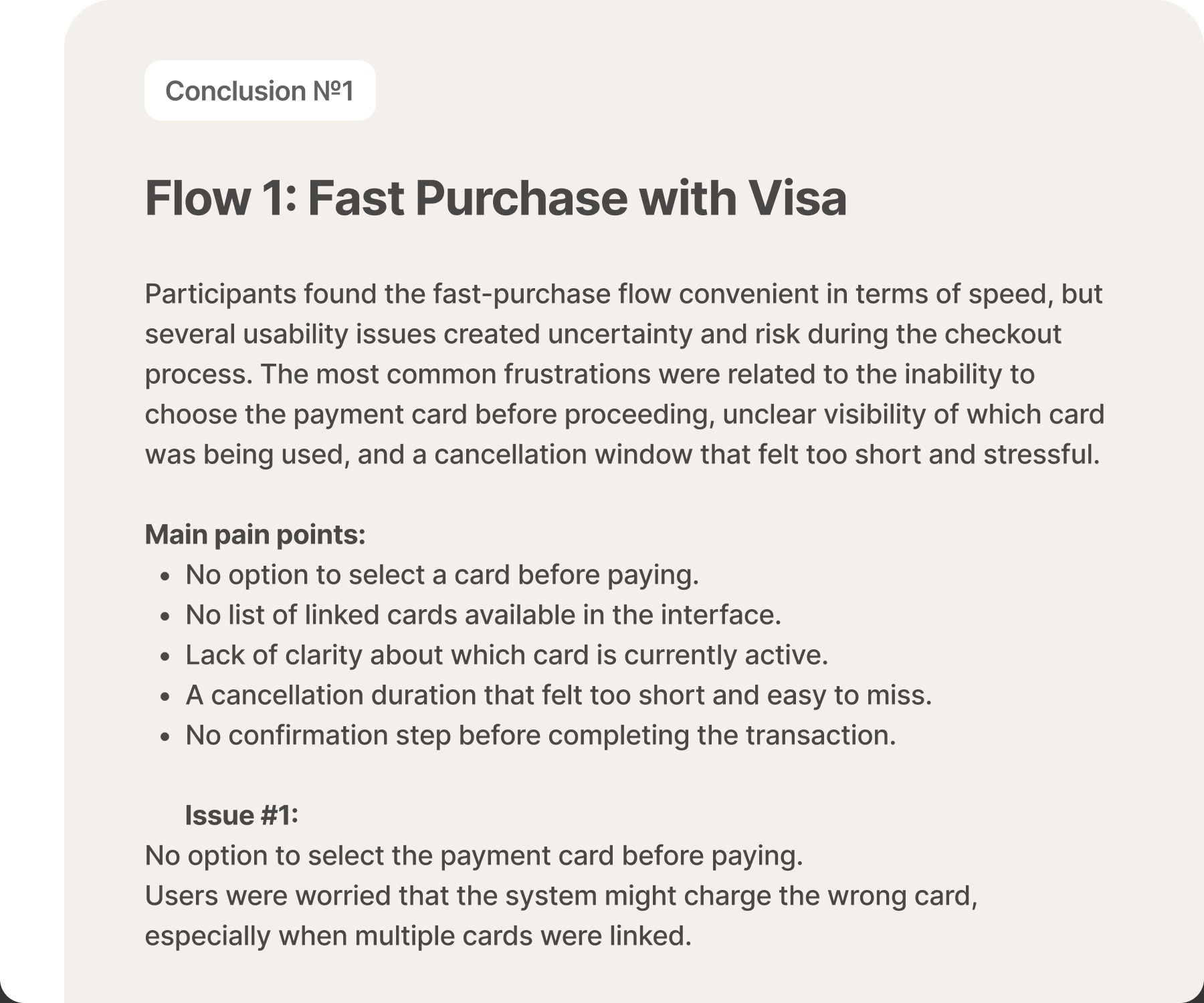
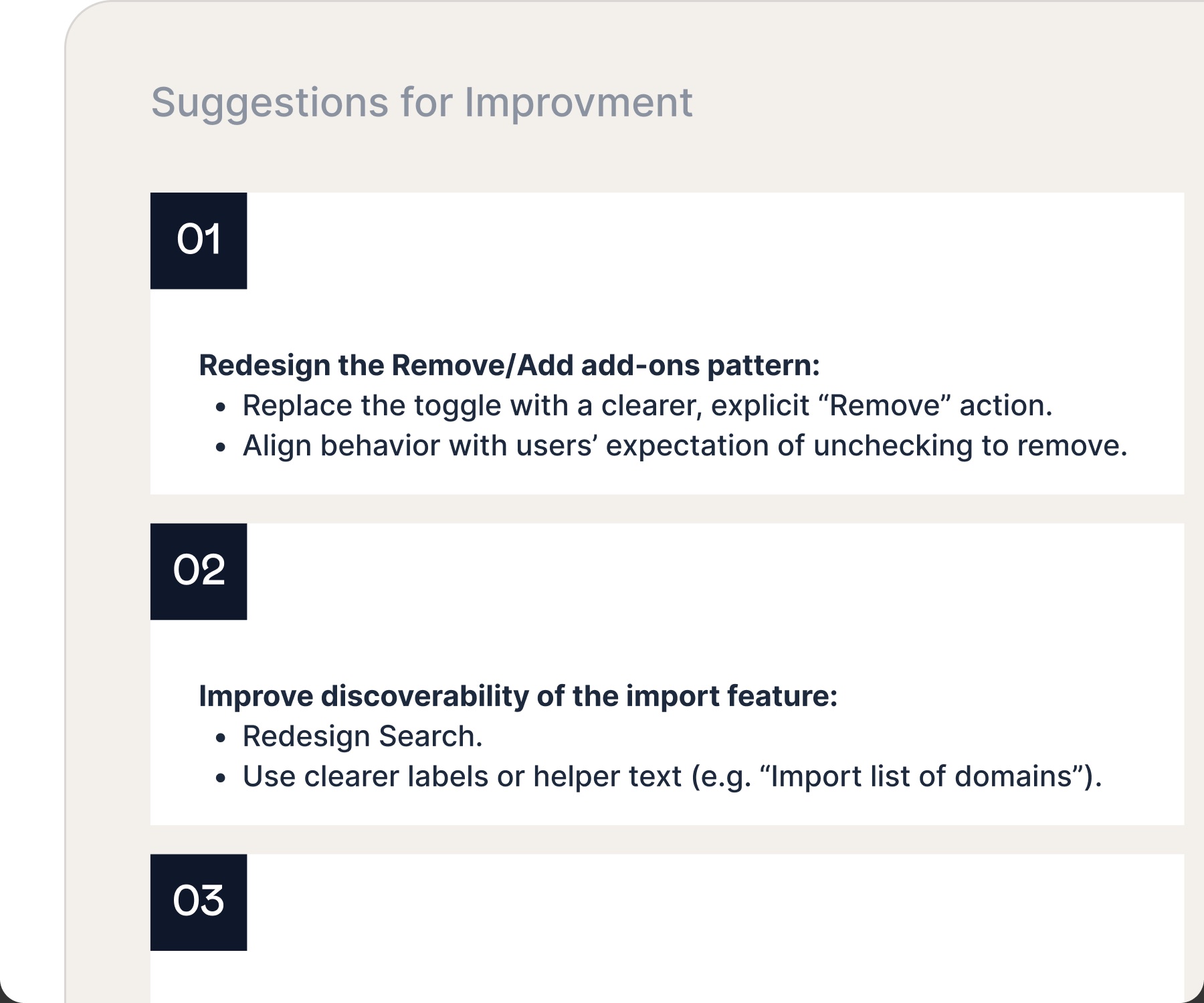
Every engagement closes with a structured report — findings, patterns, severity ratings, and clear next-step recommendations.

A rhythm built
for product decisions
You'll have findings when you need them — not after the sprint has already started.
Research Scoping
We define what you need to know, why it matters, and which methods will answer it fastest. A clear research plan prevents wasted effort and keeps findings focused.
ResearchParticipant Recruitment
We recruit from your actual user base — screened against specific criteria. Outreach, scheduling, incentives, and consent handled entirely by us.
Target AudienceData Collection
Interviews, usability sessions, surveys, and behavioral analysis run in parallel where possible. All sessions recorded and transcribed.
Usability SessionsReport & Recommendations
Structured findings report with user personas, journey maps, prioritized insights, and a strategic roadmap of recommended changes — delivered with a walkthrough call.
ReportA focused usability study takes 2–3 weeks. A full discovery research engagement typically runs 4–6 weeks.
Why product teams trust
Glow for UX research
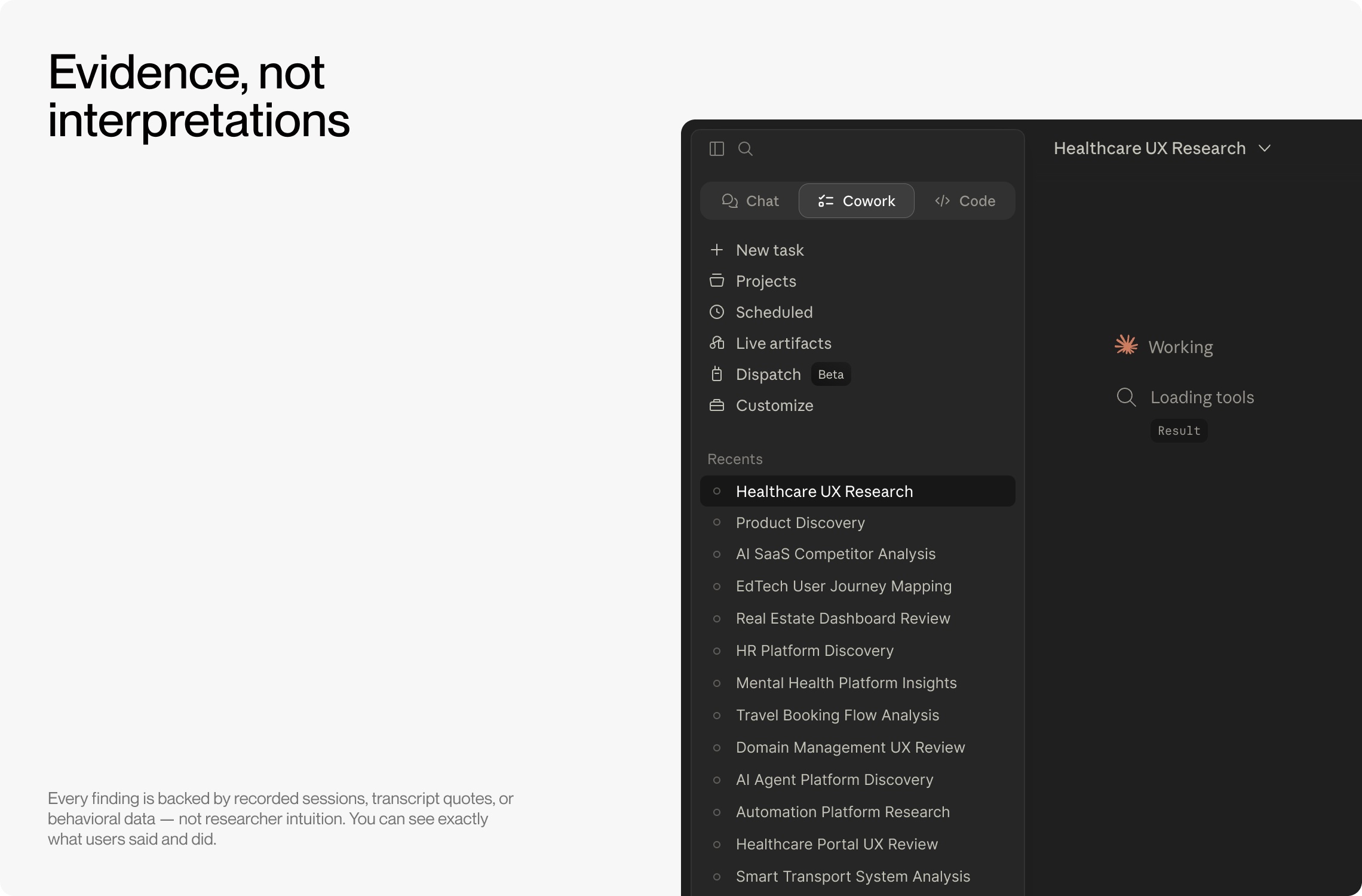
Every finding is backed by recorded sessions, transcript quotes, or behavioral data — not researcher intuition. You can see exactly what users said and did.
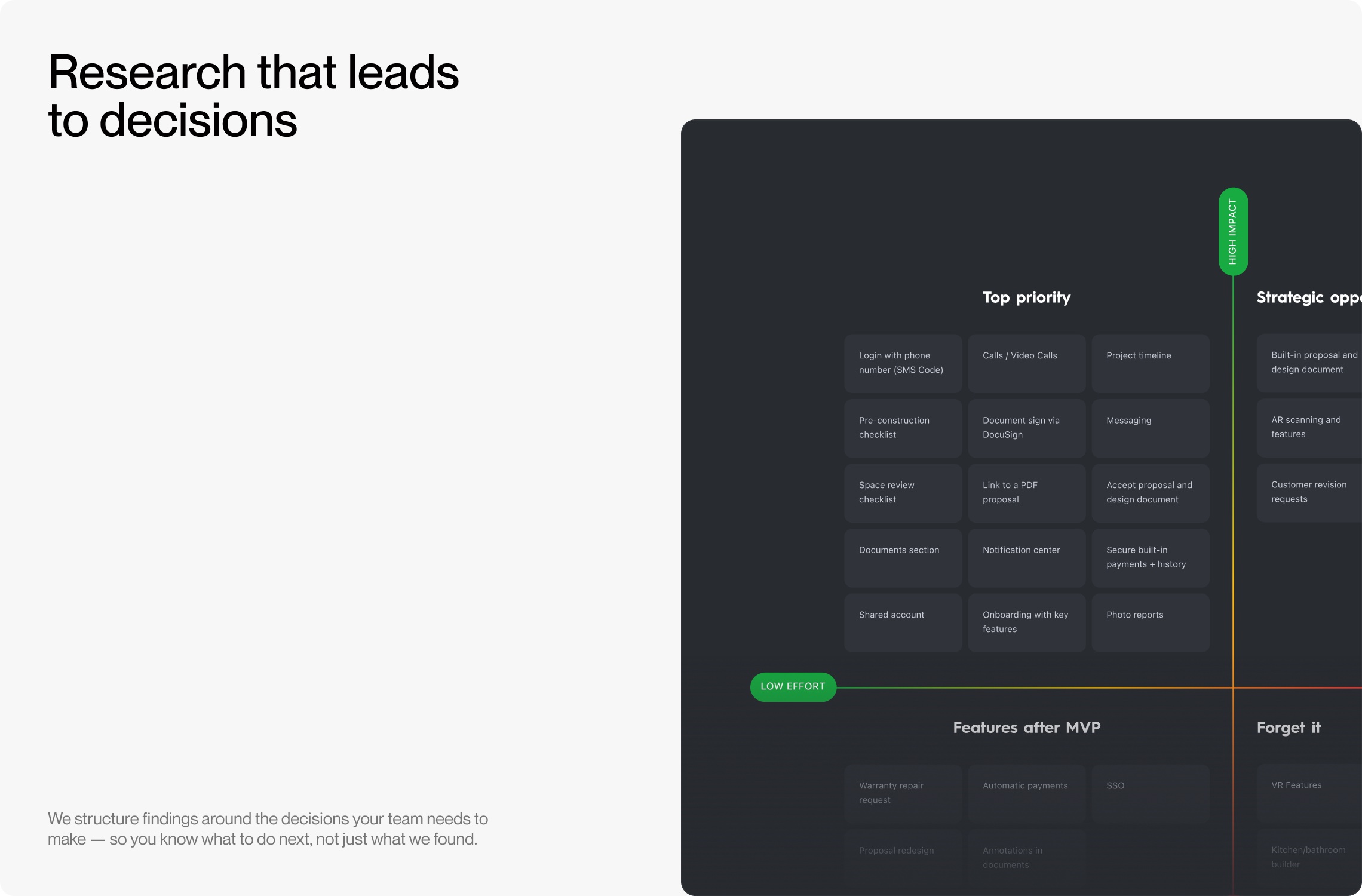
We structure findings around the decisions your team needs to make — so you know what to do next, not just what we found.
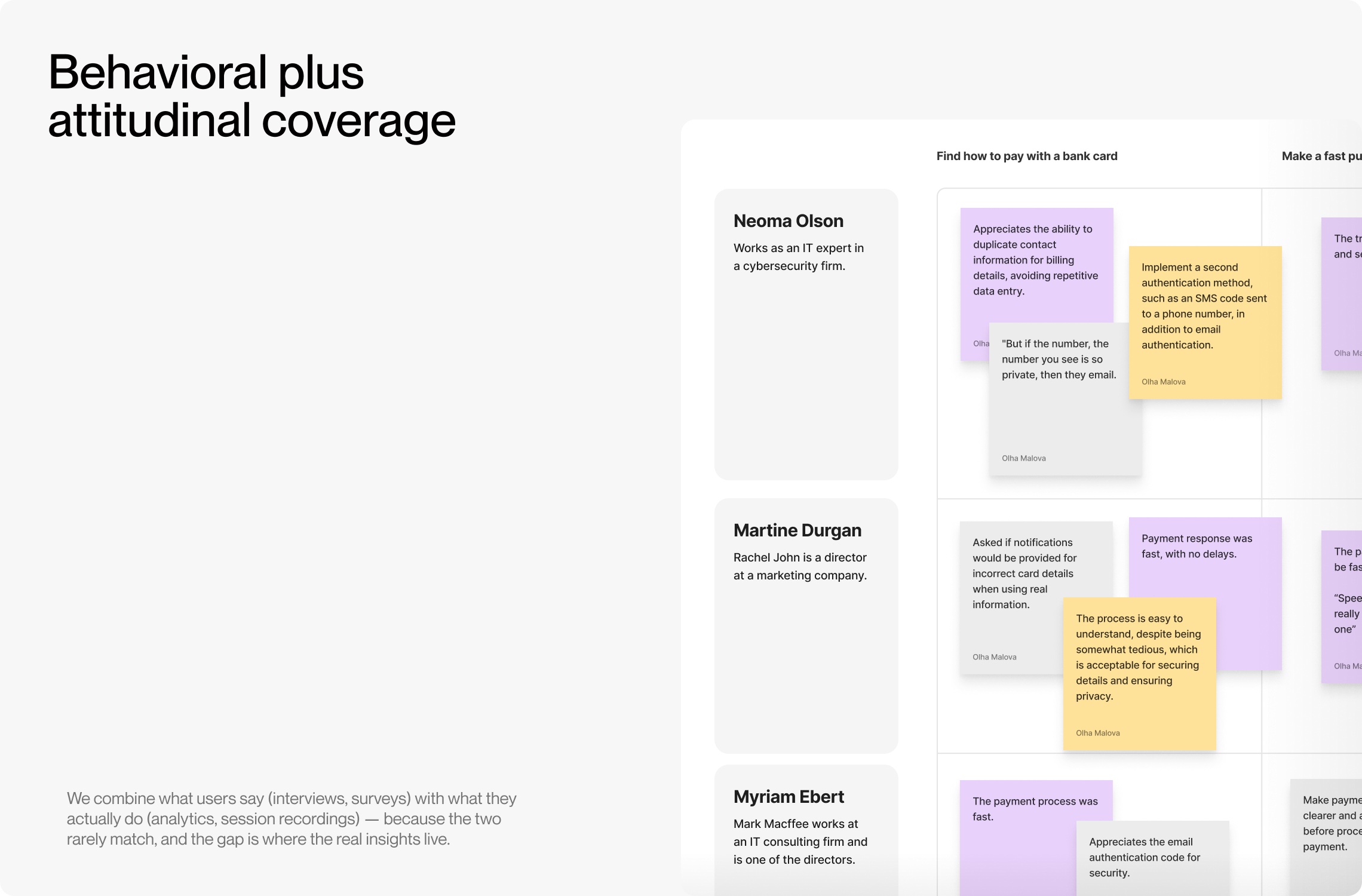
We combine what users say (interviews, surveys) with what they actually do (analytics, session recordings) — because the two rarely match, and the gap is where the real insights live.
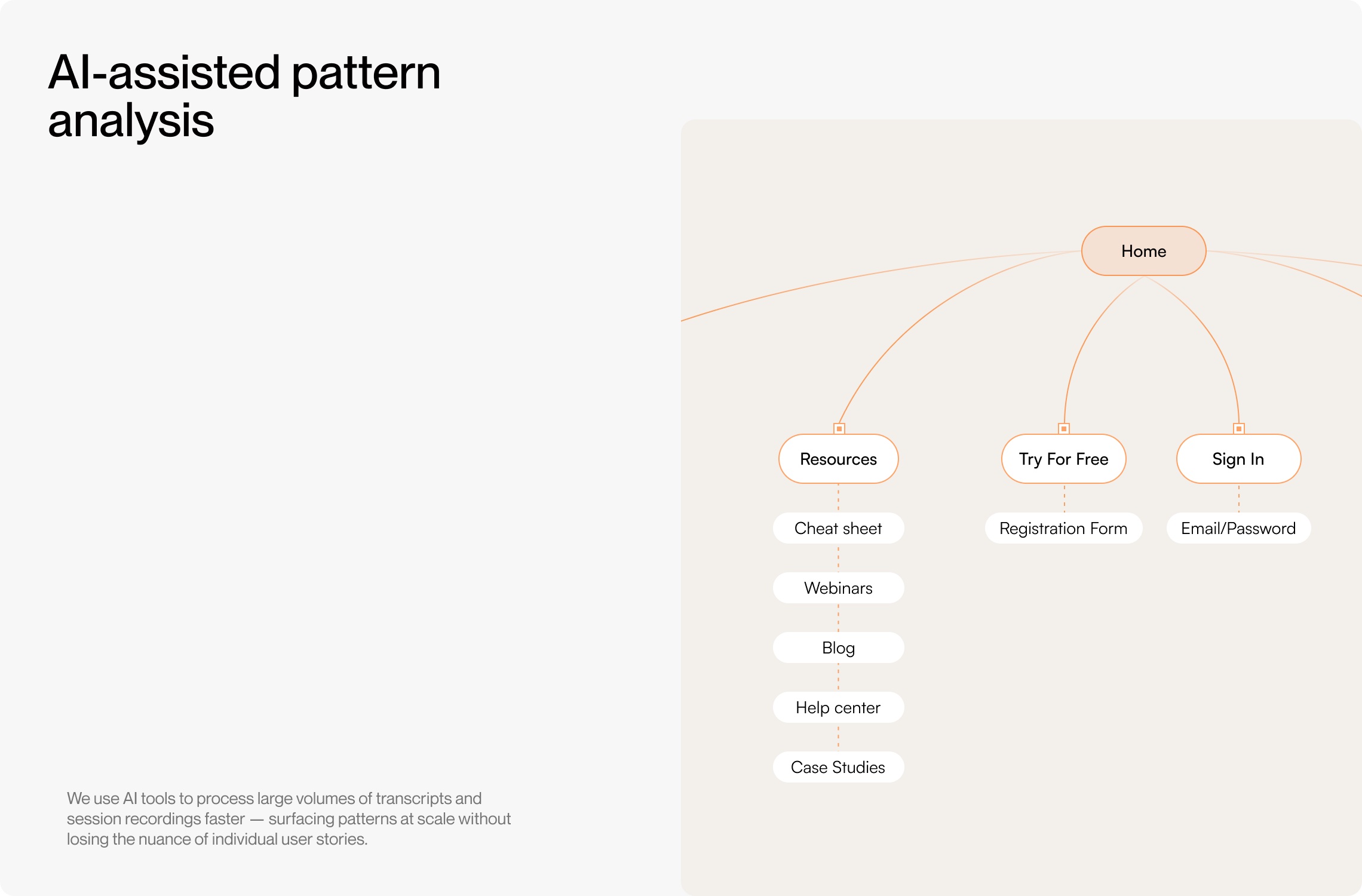
We use AI tools to process large volumes of transcripts and session recordings faster — surfacing patterns at scale without losing the nuance of individual user stories.
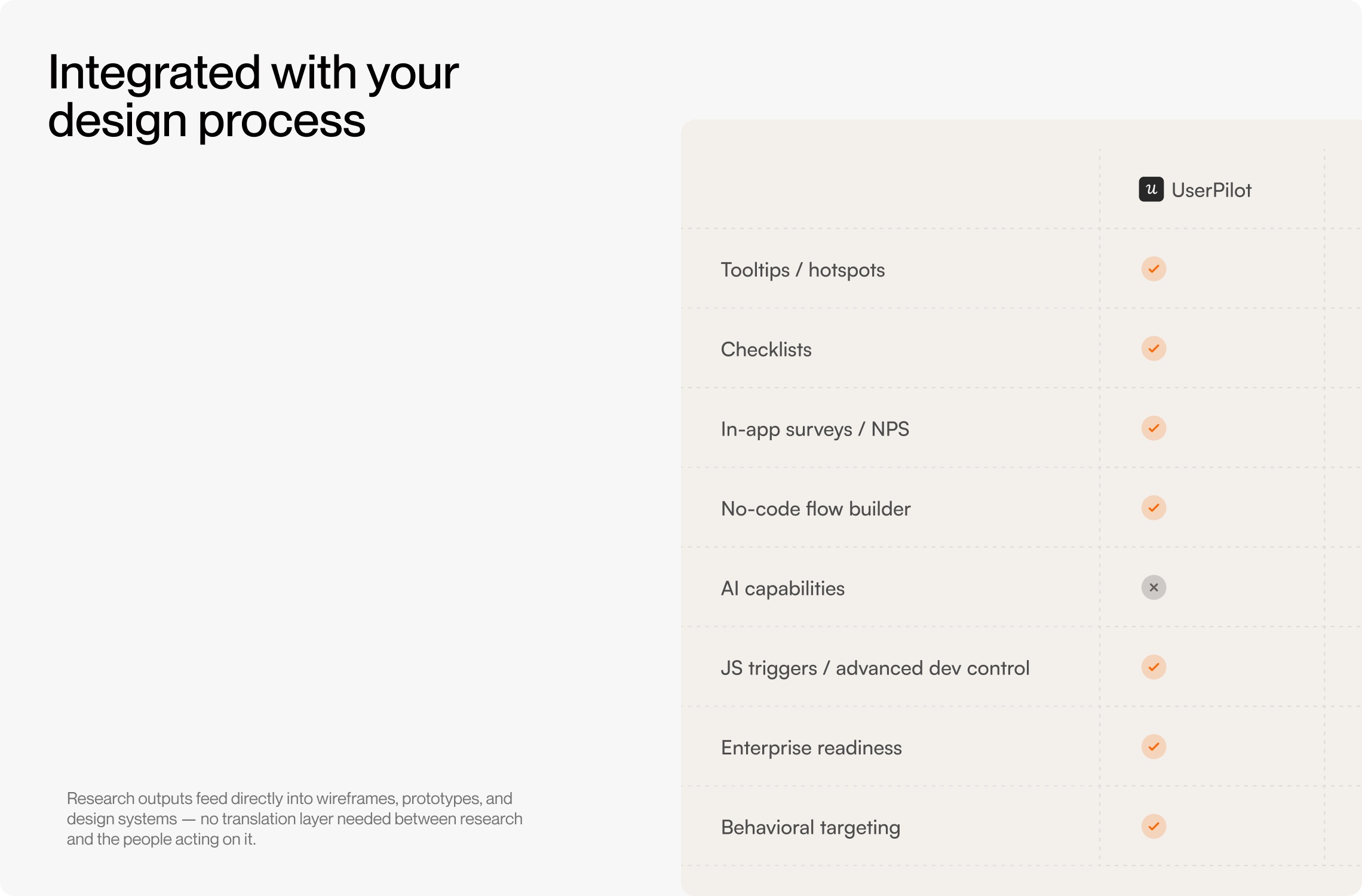
Research outputs feed directly into wireframes, prototypes, and design systems — no translation layer needed between research and the people acting on it.
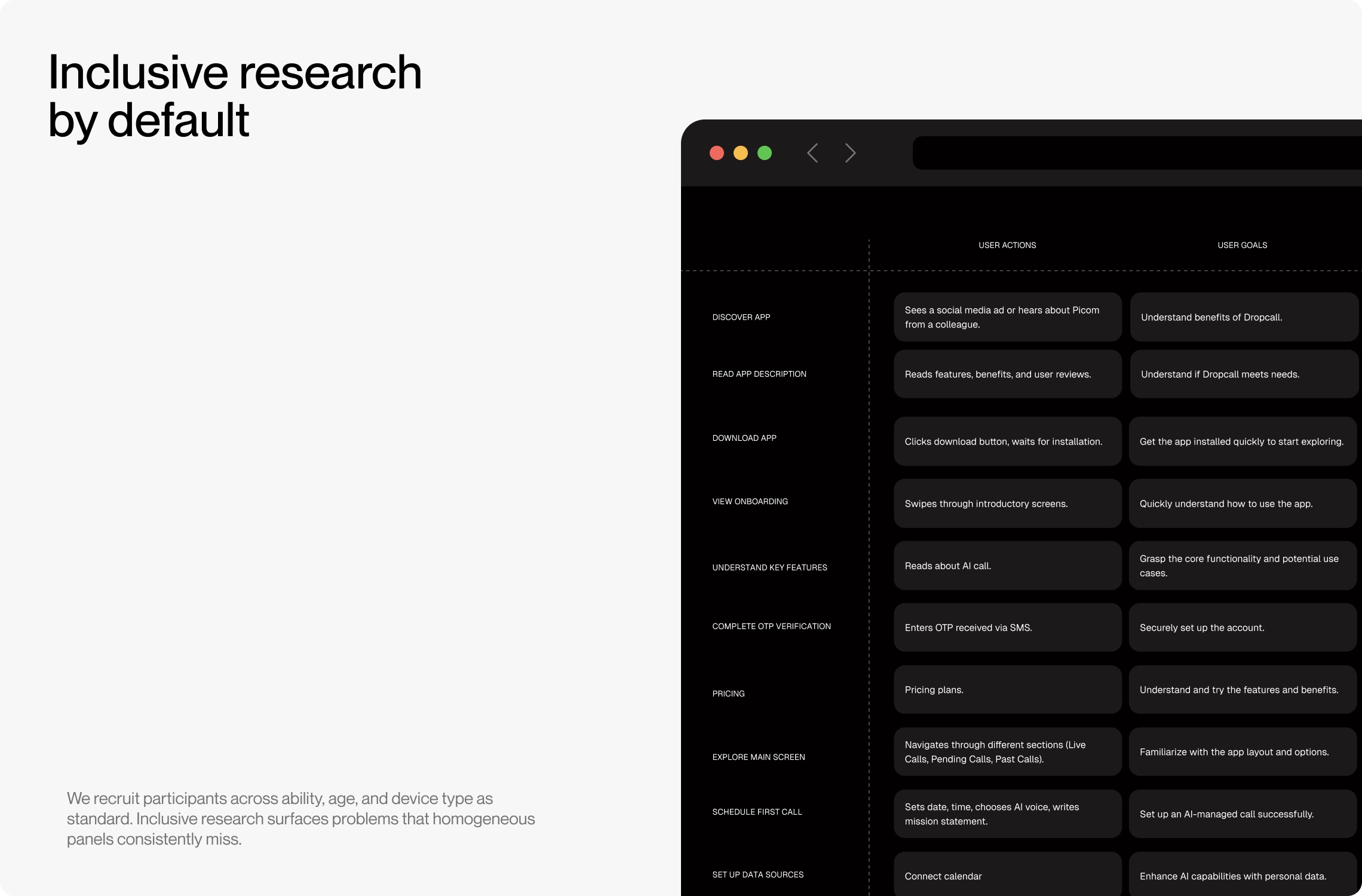
We recruit participants across ability, age, and device type as standard. Inclusive research surfaces problems that homogeneous panels consistently miss.






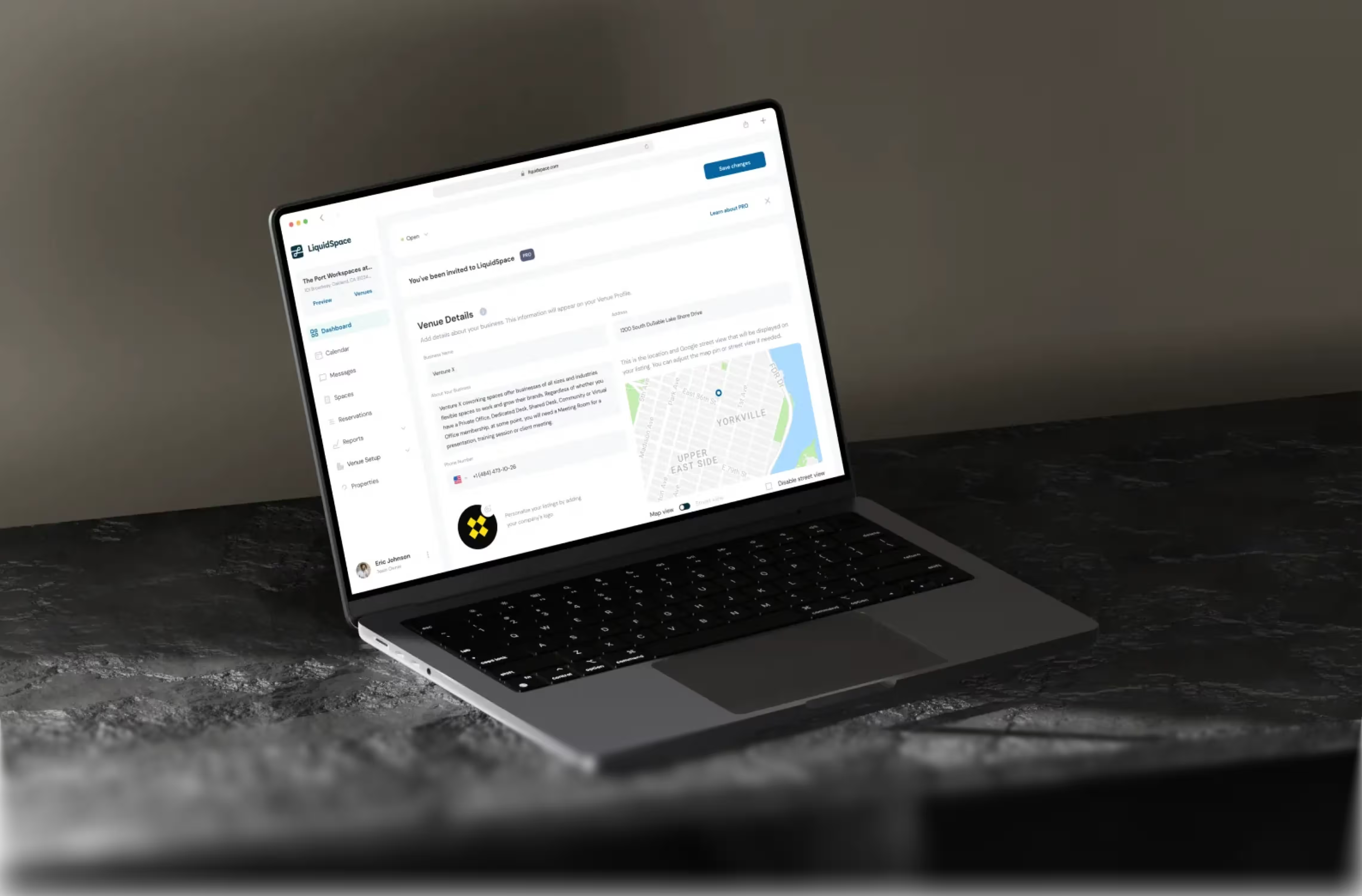


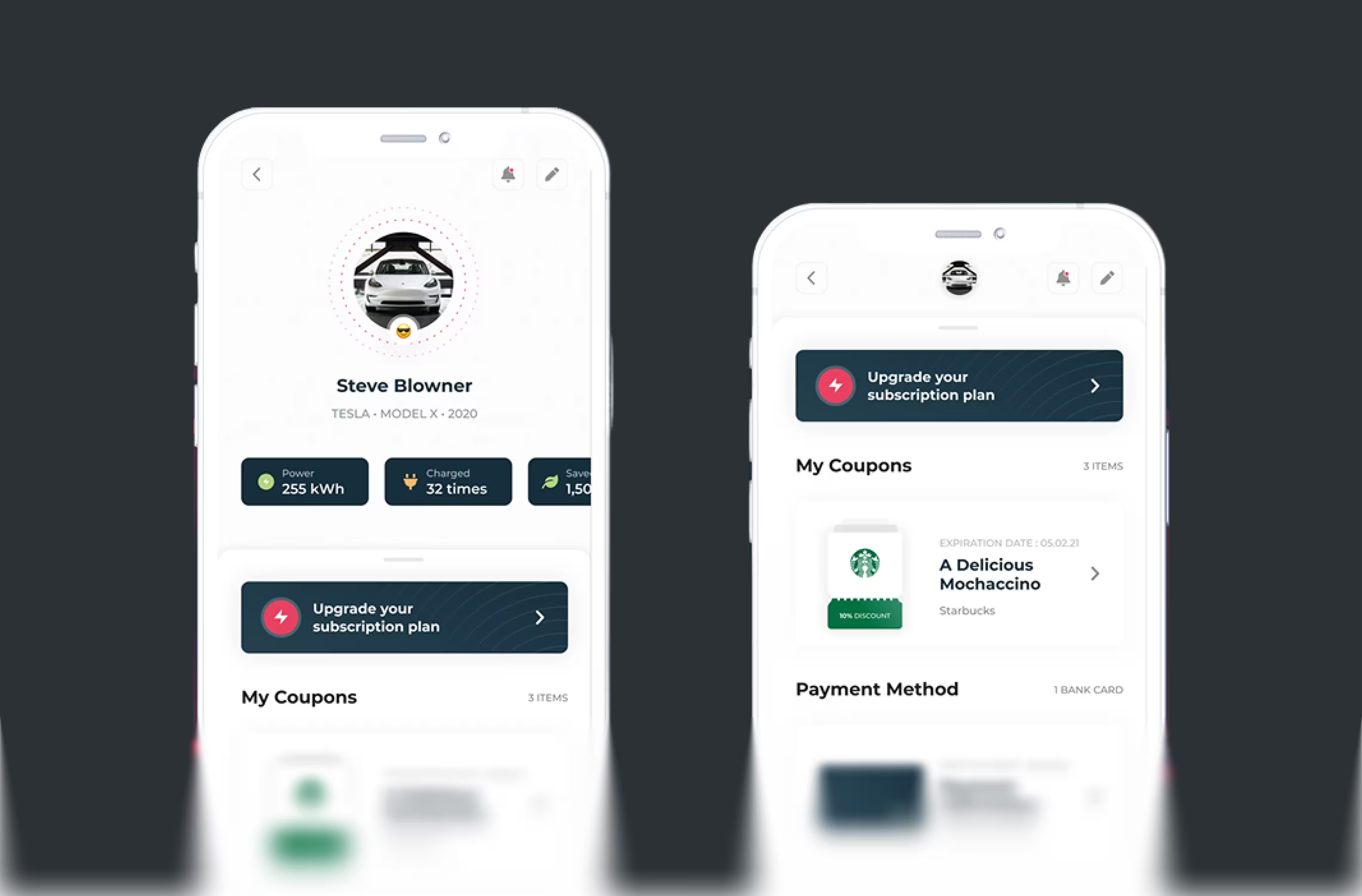



.jpeg)
UX Research for every
stage of your product
The right research at the right stage prevents the wrong decisions at the worst time.
Discovery Research
We identify who your users are, what they need, and what's stopping them — before a single design decision is made.
Concept Validation
We test your ideas, wireframes, or prototypes with real users before development begins — so you invest in what works.
Usability Testing
Moderated sessions with real users performing real tasks — surfacing friction that analytics alone will never show you.
Post-Launch Analysis
We combine behavioral data, session recordings, and interviews to evaluate how real users interact with your live product.
Ongoing Research Retainer
Quarterly research cycles that track how user needs evolve as your product grows — so design decisions stay current.


Frequently
asked questions
A UX audit is an expert evaluation of an existing product. UX research investigates why users behave the way they do and what they need that the product isn't providing. They complement each other — audits often lead to research, and research informs better audits.
A UX audit is an expert evaluation of an existing product. UX research investigates why users behave the way they do and what they need that the product isn't providing. They complement each other — audits often lead to research, and research informs better audits.
A focused usability study takes 2–3 weeks. A full discovery engagement — interviews, behavioral analysis, competitive benchmarking, and strategic recommendations — typically takes 4–6 weeks.
A focused usability study takes 2–3 weeks. A full discovery engagement — interviews, behavioral analysis, competitive benchmarking, and strategic recommendations — typically takes 4–6 weeks.
For qualitative methods, 5–8 participants per user segment typically surfaces the most significant patterns. For surveys, we recommend 50+ responses for statistical reliability.
For qualitative methods, 5–8 participants per user segment typically surfaces the most significant patterns. For surveys, we recommend 50+ responses for statistical reliability.
Yes. Concept validation, prototype testing, and jobs-to-be-done interviews are all effective at pre-launch stage — and that's where the ROI is highest.
Yes. Concept validation, prototype testing, and jobs-to-be-done interviews are all effective at pre-launch stage — and that's where the ROI is highest.
Yes — when the research scope supports it. They're built from research data, not from templates, so they reflect how your actual users think and behave.
Yes — when the research scope supports it. They're built from research data, not from templates, so they reflect how your actual users think and behave.
Research report with findings and evidence, user personas, journey maps (where in scope), prioritized recommendations, session recordings and transcripts, and a strategic roadmap of next steps.
Research report with findings and evidence, user personas, journey maps (where in scope), prioritized recommendations, session recordings and transcripts, and a strategic roadmap of next steps.