9 Design Thinking Consulting Agencies (2026)


A comparison of nine design thinking consulting agencies, from large consultancies such as IDEO, frog and Designit to SaaS design partners. It explains what design thinking involves, how a facilitation consultancy differs from a partner that ships the product, and how to choose between them.
Searching for design thinking consulting agencies usually means one of two very different things. Either you want someone to run workshops and hand your team a framework, or you want a partner who applies the same human-centered thinking while actually building the product. The nine agencies below cover both, and the difference matters more than any ranking does, because picking the wrong type wastes a quarter and a budget either way.
If your product is specifically AI-driven, worth knowing up front: this is a general design thinking list, and a narrower comparison of UX agencies for AI startups covers that ground in more depth.
What design thinking actually means (and what it doesn't)
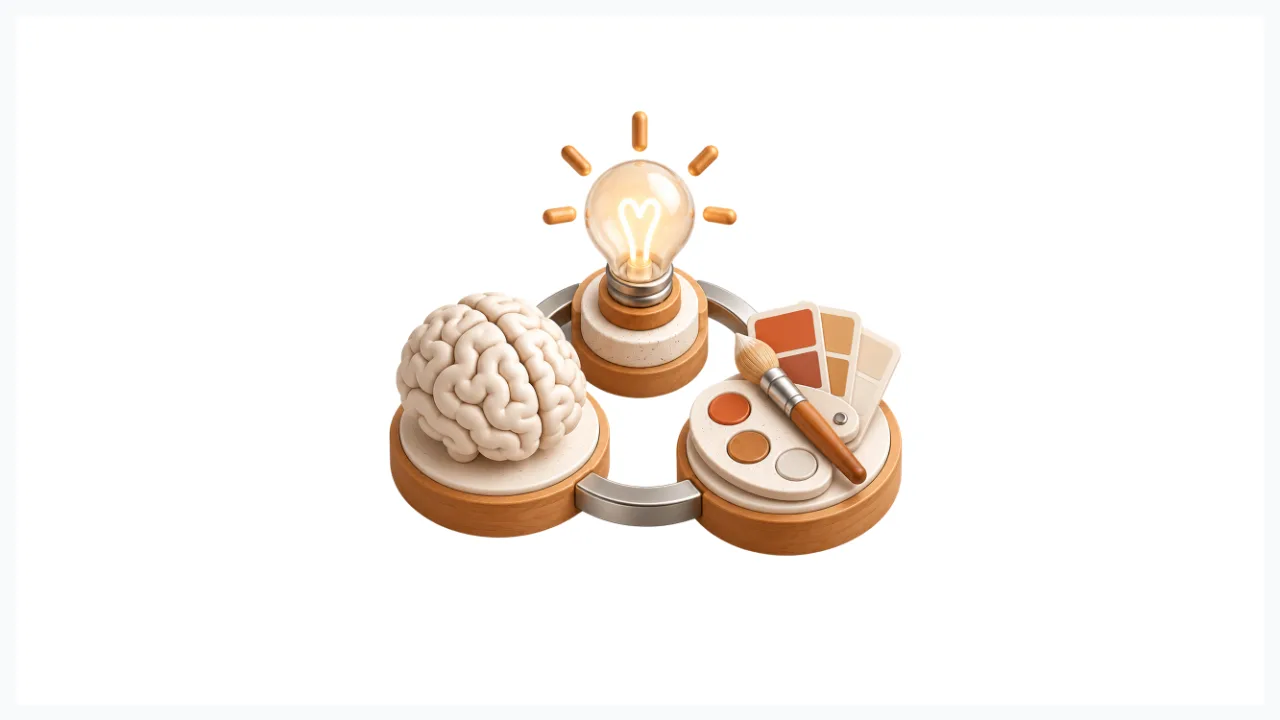
Design thinking is a problem-solving method built around five stages: empathize with the people who have the problem, define what the problem actually is, ideate a range of possible solutions, prototype the most promising ones cheaply, and test them with real users before committing real budget. Stanford's d.school and IDEO popularized the framework, and it has since become shorthand for "we talked to users before we built anything," which is a lower bar than it sounds. A lot of firms that claim the label run a single workshop and call it done. The ones worth hiring treat it as an input to a longer process, not the whole engagement.
The stages are not as linear as the diagram suggests either. A real engagement loops back constantly: testing in week six often reveals that the problem defined in week one was slightly wrong, and a good team redefines it rather than forcing the original brief through to the end. Firms that present design thinking as a straight line from empathize to test, with no loop back, are usually describing the workshop version, not the version that survives contact with actual users.
Consultancy or design partner: which one you actually need
Pure design thinking consultancies sell facilitation: a structured workshop, a set of frameworks, sometimes a strategy document, usually delivered to an internal team that then goes and builds the thing themselves. This is the right fit for a larger organization that has its own product and engineering capacity and needs outside help unsticking how it thinks, not outside help shipping. It fits less well for an early-stage startup that has no internal design or engineering bench to hand the framework to.
A design partner applies the same empathize-define-ideate-prototype-test discipline but stays through prototyping, testing, and actual delivery. For a founder who needs a shippable product at the end, not a workshop deck, this is usually the better fit, since you run one continuous engagement instead of a strategy phase followed by a separate build phase with a different vendor. Several firms below do both, so ask what they deliver at the end. Sort the list below by which kind of firm you actually need before you sort it by name recognition.
The 9 design thinking consulting agencies

1. Glow Design Agency. A product design partner for AI and SaaS startups, from seed to Series A. We are Glow, so read our entry with that in mind. Glow runs design thinking as a continuous discipline embedded in the build, not a separate workshop phase: a free 3-day trial redesigns one real screen from your product so you can see the process before committing to anything. Fixed-price engagements, no hourly billing. The right fit if you need a shipped product, not a strategy document to hand your own team.
2. IDEO. A global design and innovation company that helped popularize design thinking in business. Its work covers products, services, strategy, and organizational change, for clients including Ford, H&M, and Los Angeles County. IDEO has studios in Cambridge (Massachusetts), Chicago, London, San Francisco, and Shanghai. It also trains and coaches client teams to use design thinking in their own work.
3. frog. Part of Capgemini Invent. The company began in 1969, when Hartmut Esslinger founded esslinger design in Germany's Black Forest. It combines design, data, strategy, and engineering, with services from growth strategy and organization design to product development. frog works with large corporations and with founders of early-stage startups, and lists studios across Europe, Asia, North America, and Oceania.
4. Designit. An experience innovation company owned by Wipro, working where technology, design, strategy, and marketing meet. It serves sectors including healthcare, finance, retail, technology, energy, and the public sector, with work for FedEx, Nokia, and Lloyds Banking Group. Designit lists 11 studios, among them Copenhagen, London, Madrid, Munich, New York, and Sydney.
5. Manyone. A strategic design consultancy founded in 2019, with Nordic roots. It reports more than 250 strategists, designers, and technologists, and its About page lists 14 locations in 9 countries. Clients range from scale-ups to global organizations. Manyone offers fixed-price sprints for defined scopes, and says a sprint might take four to six weeks, with larger engagements running for months.
6. Stonehill. A strategy and innovation consultancy headquartered in Tampa, serving Fortune 1000 companies, private equity, and government clients. Design thinking is its guiding methodology, and it runs facilitated workshops and design thinking education. Its other services include organizational design, post-merger integration, and change management. The firm describes its work as something that gets built, tested, and deployed, not only advised on.
7. UX studio. A UX design, research, and development agency for B2B SaaS teams, founded in 2013 and headquartered in Budapest with 40-plus experts. Its sectors include fintech, legal, healthcare, logistics, and education. UX studio offers a free five-day trial that ends with two to three designed screens, and proposes a three-month minimum for embedded teams.
8. Eleken. A SaaS-only product design agency founded in 2015, with a distributed team from Kyiv. It works on a monthly subscription: $4,599 for a part-time designer or $6,599 for a full-time one, with a two-month minimum contract. A free three-day trial produces one to two screens before a client commits. Eleken reports more than 200 projects.
9. Clay. A branding and UX design agency headquartered in San Francisco, with locations in New York, Austin, Denver, Lisbon, and Belgrade. Its client list includes Meta, Google, Coinbase, Uber, Sony, and Toyota, and it says it works with clients from startups to Fortune 100 companies. Clay works on time and materials, fixed fee, or retainer.
How to choose between them
Start with what you are actually buying: a framework your own team will execute, or a finished, tested product. If it is the former and you already have design and engineering capacity in-house, IDEO, frog, Designit, Manyone, or Stonehill fit the brief. We found no published prices for these five, so ask for a quote early. Hiring one of these for a startup that has no team to hand the output to is a common mistake, and it is also how a design budget gets burned before a single screen ships.
If you need the thing actually built, and you are a startup watching runway, Glow, UX studio and Eleken are a closer match: each works with SaaS teams and offers a free trial. Among those, the fastest way to tell whether the working relationship will actually suit you is to run a small paid or trial engagement before signing anything longer. Choosing the right design partner for your startup goes deeper into the specific questions worth asking before a full engagement starts, and it applies whether or not Glow ends up being the one you pick.
One more filter worth applying regardless of budget: ask each firm directly how they define design thinking and what they actually deliver at the end of it. A vague answer about "innovative frameworks" is a tell. A specific answer about what gets prototyped, tested, and shipped, and on what timeline, is what separates a real process from a one-time workshop with a nice deck attached. Ask for one past project where testing changed the original brief, too. A firm that has never had to redefine a problem mid-engagement either has not done enough real work yet, or is not being straight about how messy the process actually gets.
Whichever list of design thinking consulting agencies a founder ends up comparing, the same rule holds: match the engagement type to what you can actually use afterward, not to the name that sounds most impressive on a call.
Frequently Asked Questions
What does a design thinking consultant do?
A design thinking consultant runs the empathize, define, ideate, prototype, and test process to solve a specific product or business problem, either as a standalone workshop for an internal team or as part of a longer engagement that carries through to a built, tested product.
How much does design thinking consulting cost?
We found no published amounts for most firms on this list, so expect a quote per project. Eleken is an exception: its subscription is $4,599 a month for a part-time designer or $6,599 for a full-time one, with a two-month minimum. Manyone and Clay publish how they charge, but not amounts: Manyone offers fixed-price sprints and time and materials, Clay offers time and materials, fixed fee, or retainer.
What is the difference between design thinking and UX design?
Design thinking is a problem-solving methodology that can apply to any kind of challenge, product or otherwise. UX design is the practice of applying that kind of human-centered thinking specifically to digital product interfaces. Most product design agencies use design thinking principles as part of how they do UX design, rather than treating the two as separate services.
Do startups need a design thinking consultancy?
Most startups need a design partner who applies design thinking principles while actually building the product, not a standalone strategy consultancy. A pure facilitation engagement makes more sense for a larger company that already has design and engineering capacity to execute on the framework afterward.
What are the 5 stages of design thinking?
Empathize, define, ideate, prototype, and test. The stages are not strictly linear in practice: teams often loop back to earlier stages as testing reveals the problem was defined incorrectly in the first place.



Related Articles Prompted by Glow











Get weekly glow prompts—
insights from the frontline of product design
Check your inbox for future updates.

No spam.
Just sharp insights that make you better at design & AI.
Want results like this? Book a call
Let’s talk through your product in 30 minutes — no briefs, no fluff. Or start with a free 3‑day trial: one real screen from your product in 3 working days. No card, no contract.