Why Graphic Design Is Important for Modern Digital Products


Why graphic design is the backbone of successful digital products. From building trust to improving UX, learn 7 key reasons why design drives business growth.
In today's saturated digital marketplace, where thousands of apps, SaaS platforms, and websites compete for attention, what separates the winners from the forgotten? It's rarely the technology - competitors can reverse-engineer features within months. The real differentiator is graphic design. Why graphic design is important becomes evident the moment a potential customer encounters your product. Before they read a single word, they've already made a judgment based purely on visual presentation. In a crowded digital market where users have infinite alternatives one click away, design isn't a luxury - it's the only sustainable competitive advantage left.
Quick Summary (Key Takeaways)

Core Importance: Graphic design in digital products serves as the "visual language" that translates complex ideas into digestible visuals, builds immediate trust, and strategically guides user behavior toward desired actions.
Key Statistics That Prove Impact:
- First Impressions: 94% of first impressions about digital products are design-related, formed within 50 milliseconds
- Processing Speed: Visuals are processed 60,000 times faster than text, making visual communication in business the most efficient information delivery method
- Revenue Impact: Consistent, professional design can increase revenue by up to 23%
- Trust Factor: 75% of users judge a company's credibility based on website design quality
Primary Benefits:
- Creates powerful first impressions in digital products that determine whether users stay or leave
- Establishes a consistent brand identity that builds recognition and loyalty
- Enhances user experience (UX) and graphic design integration for intuitive navigation
- Communicates complex information instantly through strategic visual elements
- Builds trust and professionalism through design
- Differentiates your product in crowded markets where features are commoditized
- Drives measurable conversion rate optimization (CRO) and business ROI
1. The Power of First Impressions

Understanding why graphic design is important begins with recognizing the reality of digital first impressions: you have approximately 50 milliseconds to make a first impression on users. Research from Google reveals that first impressions in digital products are 94% design-related. This means before users process your messaging or evaluate your pricing, they've already decided whether your product appears trustworthy and professional.
Poor design doesn't just create a negative impression - it immediately triggers loss of trust. When users encounter cluttered layouts, inconsistent typography, or clashing colors, their instinctive reaction is to be skeptical. If a company can't invest in professional design, users unconsciously reason, what else are they cutting corners on?
Conversely, polished graphic design in digital products creates an instant positive association. Users subconsciously associate visual quality with product quality and trustworthiness. The importance of graphic design for business lies partly in this immediate transfer of credibility, where design quality serves as a proxy for overall business competence.
2. Building a Consistent Brand Identity

Brand identity consistency represents one of the most potent aspects of graphic design in digital products. Consistency creates credibility through psychological principles of familiarity and reliability. When users encounter the same logo treatment, color palette, typography system, and visual style across every touchpoint - website, mobile app, emails, social media - they unconsciously register the brand as established and trustworthy.
Inconsistency triggers immediate suspicion. When a SaaS product's landing page uses modern typography but its emails use Times New Roman, users subconsciously question whether they're dealing with the same company. The importance of graphic design for business extends beyond individual touchpoints to creating cohesive experiences that build recognition over time.
Strategic brand identity consistency involves establishing comprehensive design systems: defined color palettes, typography hierarchies, spacing rules, icon styles, and interaction patterns. These systems ensure that whether a user encounters your product on mobile, desktop, or in email, the experience feels unified and intentional.
The business impact is measurable. Consistent brand presentation across all platforms increases revenue by up to 23%. This revenue lift stems from improved brand recognition, enhanced trust, and stronger differentiation. Visual communication in business becomes more efficient when audiences instantly recognize your brand rather than having to process unfamiliar design patterns.
3. Enhancing User Experience (UX) and Usability

The relationship between user experience (UX) and graphic design is inseparable in modern digital products. While UX encompasses the entire interaction framework, graphic design provides the visual implementation that determines whether users can actually navigate intuitively. Why graphic design is important for usability becomes evident when even the most logical architecture fails if visual hierarchy doesn't guide users appropriately.
Visual hierarchy in web design creates the pathway users follow through information. Through strategic manipulation of size, color, contrast, spacing, and positioning, designers direct attention to essential elements first, then guide users through secondary information in intentional sequences. Without this hierarchy, interfaces become overwhelming walls of content where users struggle to identify what matters.
Consider a SaaS pricing page. Clear visual hierarchy uses size to emphasize the recommended plan, strategic color for call-to-action buttons, whitespace to separate pricing tiers, and typography to distinguish features. Poor visual hierarchy treats all information equally, forcing users to work harder to compare options. The importance of graphic design for business outcomes becomes quantifiable: well-designed pages convert at significantly higher rates.
The integration of user experience (UX) and graphic design extends beyond hierarchy to encompass readability and comprehension. Typography choices affect reading speed. Color selections influence emotional responses. Spacing determines whether interfaces feel cluttered or clean. Icon design impacts whether users immediately understand functionality.
Graphic design in digital products also communicates system status and feedback. Loading states, error messages, and success confirmations rely on visual design to communicate effectively. Well-designed feedback reassures users, explains what's happening, and guides error recovery.
4. Visual Communication: Speaking Without Words

Visual communication in business leverages a fundamental neurological reality: the human brain processes images 60,000 times faster than text. This isn't merely interesting trivia - it's a strategic imperative for graphic design in digital products, especially complex offerings like enterprise software and SaaS platforms requiring significant explanation.
The "show, don't tell" principle becomes essential when communicating abstract concepts or technical features. Consider a project management platform explaining Gantt chart functionality. A paragraph describing task dependencies requires users to translate words into mental models. An infographic communicates the same information instantly and more accurately. Why graphic design is important for product comprehension becomes evident: visuals are often the most effective way to convey certain concepts.
Icons serve as universal language elements in graphic design in digital products, conveying functionality without words. A trash can communicates deletion, a gear represents settings, and a magnifying glass indicates search. These visual metaphors transcend language barriers and reduce cognitive load by providing instant recognition.
Infographics and data visualization transform raw information into accessible insights. SaaS products generating analytics must translate numbers into meaningful patterns through strategic visual communication in business design. Charts and graphs help users identify trends and make informed decisions far more efficiently than scanning data tables.
Color coding creates another layer of visual communication in business, providing instant categorization. Status indicators using red for errors, yellow for warnings, and green for success communicate system state without words. Calendar applications use color to distinguish event types. These visual systems enable users to process information at a glance.
The efficiency gains from strategic visual communication in business compounds across user interactions. Every moment saved through visual clarity adds up to a significantly improved user experience and a greater perception of product value. Graphic design in digital products isn't decoration - it's the primary communication system for complex digital experiences.
5. Establishing Trust and Professionalism
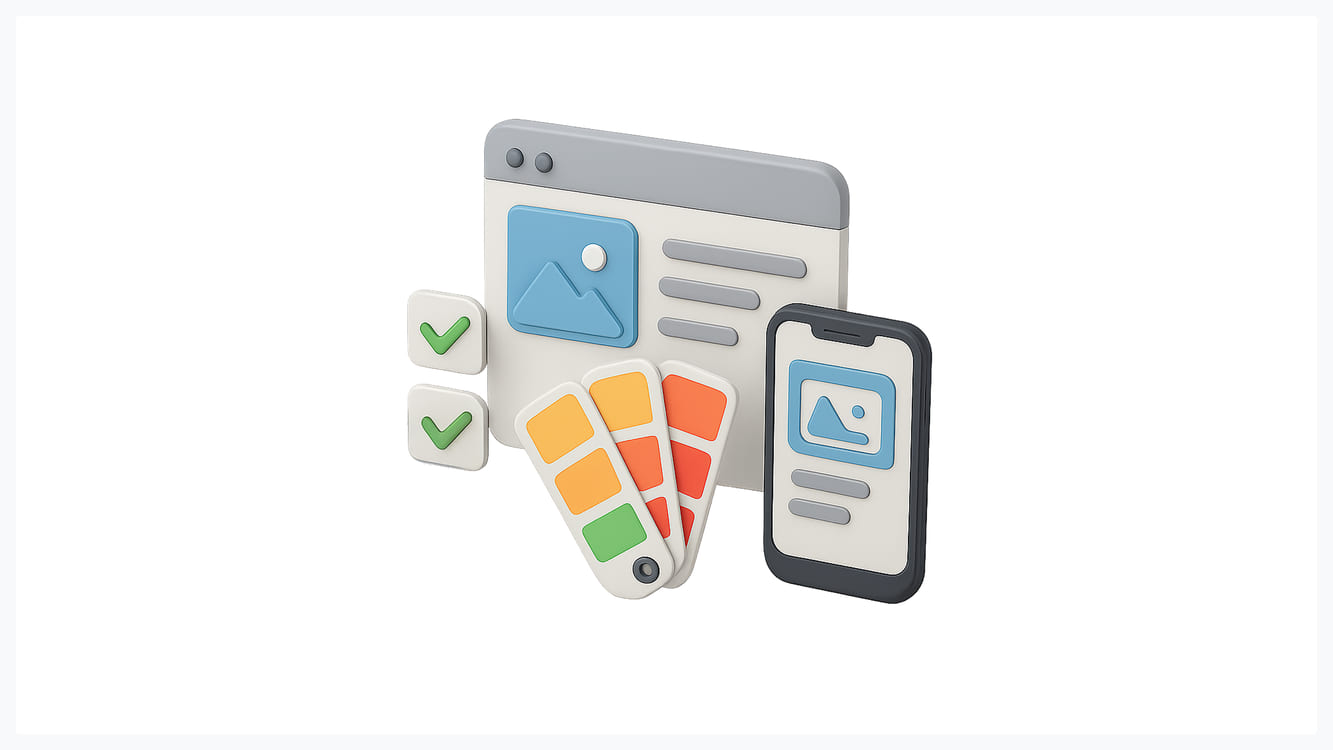
Building trust through design addresses a fundamental challenge in digital business: users must feel confident engaging with products they've never experienced face-to-face. Research shows that 75% of users judge a company's credibility based on its website design, underscoring the importance of graphic design for trust-building.
Polish and attention to detail signal professionalism. When every element appears intentional - typography kerned properly, images crisp, layouts balanced, interactions smooth - users subconsciously infer that the business operates with similar care. Conversely, pixelated logos, misaligned elements, and clumsy interactions prompt immediate skepticism about a business's competence.
Why graphic design is important for establishing legitimacy becomes particularly crucial for newer companies and innovative products. Established brands benefit from reputation, but startups must establish credibility instantly. Professional graphic design in digital products provides that credibility shortcut, signaling that despite being new, the company is serious and trustworthy.
Security perception also directly links to design quality by building trust through design principles. Users concerned about data privacy unconsciously use design quality as a proxy for security. For fintech, healthcare, and enterprise B2B products handling sensitive data, this trust dimension can determine whether users engage at all.
The professional impression created through design quality extends beyond initial trust to influence ongoing perception. Premium design positions products as premium offerings, justifying higher pricing - budget design positions offerings as budget alternatives competing on price. The importance of graphic design for business positioning means design choices directly impact which market segments you attract and what pricing power you command.
6. Differentiating from Competitors

In what product strategists call the "Sea of Same" - markets where functional parity makes products indistinguishable - graphic design in digital products becomes the primary differentiator. When competitors offer similar features and pricing, a bold, distinctive design becomes the deciding factor.
Commodity markets illustrate this principle clearly. Consider project management tools: dozens of platforms offer similar features. Yet some products command passionate loyalty and premium pricing while others struggle for attention. The difference frequently lies in design - the entire visual language and personality that graphic design in digital products creates.
Why graphic design is important for differentiation connects to human psychology around choice and identity. Users don't just select products based on functionality - they choose products that reflect their identity and values. Strategic visual communication in business speaks to specific audience segments, creating emotional resonance that feature lists cannot achieve.
Distinctive design also creates memorability. When dozens of SaaS products compete for attention, those with unique visual identities - unusual color schemes, characteristic illustration styles, innovative interactions - lodge in memory more effectively. The importance of graphic design for business recognition means distinctive brands enjoy advantages simply by being more readily recalled.
However, differentiation through graphic design in digital products requires courage. True differentiation means making design choices that some audiences will dislike to appeal strongly to the target audience. Safe, generic design attempting to appeal to everyone ultimately appeals to no one. Bold design creates strong reactions - including strong positive responses from ideal customers.
7. Driving Conversions and ROI

The ultimate business question about graphic design is whether it delivers a measurable return on investment. Research consistently confirms that strategic graphic design in digital products directly drives conversion rate optimization (CRO) and revenue growth.
Consider the conversion funnel. At every stage - initial landing, product exploration, pricing review, signup - design quality influences whether users proceed or abandon. Landing pages with a clear visual hierarchy in web design convert visitors at significantly higher rates. Product pages with effective visual communication in business drive more trial signups. Checkouts that flow with an intuitive user experience (UX) and graphic design complete more transactions.
The cumulative effect compounds dramatically. If design improvements increase conversion rates by just 2-3% at each funnel stage, total impact on completed purchases can exceed 20%. For businesses processing thousands of transactions, these percentage improvements translate to substantial revenue increases. The importance of graphic design for business ROI becomes undeniable when design investments that cost five figures generate six- or seven-figure revenue impacts.
Building trust through design also reduces acquisition costs by improving conversion efficiency. When more website visitors convert to customers without additional marketing spend, customer acquisition cost declines while customer lifetime value remains constant - dramatically improving profit per customer.
Conclusion: Design is Your Silent Salesperson
Why graphic design is important for modern digital products ultimately reduces to a simple truth: design is your silent salesperson, working 24/7 to create positive impressions, build trust, communicate value, differentiate your offering, and guide users toward conversion. Every visual decision either supports or undermines these sales objectives.
The importance of graphic design for business success in 2026 and beyond only intensifies as markets become more competitive and user expectations rise. In environments where users form judgments in milliseconds and have countless alternatives one click away, design quality determines whether products receive serious consideration or are dismissed instantly.
For companies questioning whether design investment justifies the cost, consider the alternative: in markets where design increasingly determines competitive success, can you afford not to invest? Your competitors are recognizing the importance of graphic design and acting accordingly.
Investing in graphic design in digital products is investing in your bottom line, your market position, your customer relationships, and your long-term viability. Design is the silent salesperson that never sleeps and interacts with every potential customer before any human representative gets the opportunity. Make it a compelling representative worthy of your product, your brand, and your ambitions.

.svg)

Related Articles Prompted by Glow


































Get weekly glow prompts—
insights from the frontline of product design
Check your inbox for future updates.

No spam.
Just sharp insights that make you better at design & AI.
Want results like this? Book a call
Let's talk through your product in 20 minutes — no briefs, no fluff. Just a real conversation.